
U.S. Stablecoin Regulation Explained: How the U.S. GENIUS Act Reshapes Crypto Markets


Main Takeaways:
- Dollar-backed stablecoins are now regulated financial instruments, enabling broader institutional adoption.
- Clear rules reduce legal uncertainty and build trust, while concentrating the market among large players.
- Investors should focus on structural strength — reserve quality, transparency, and governance — not short-term price movements.
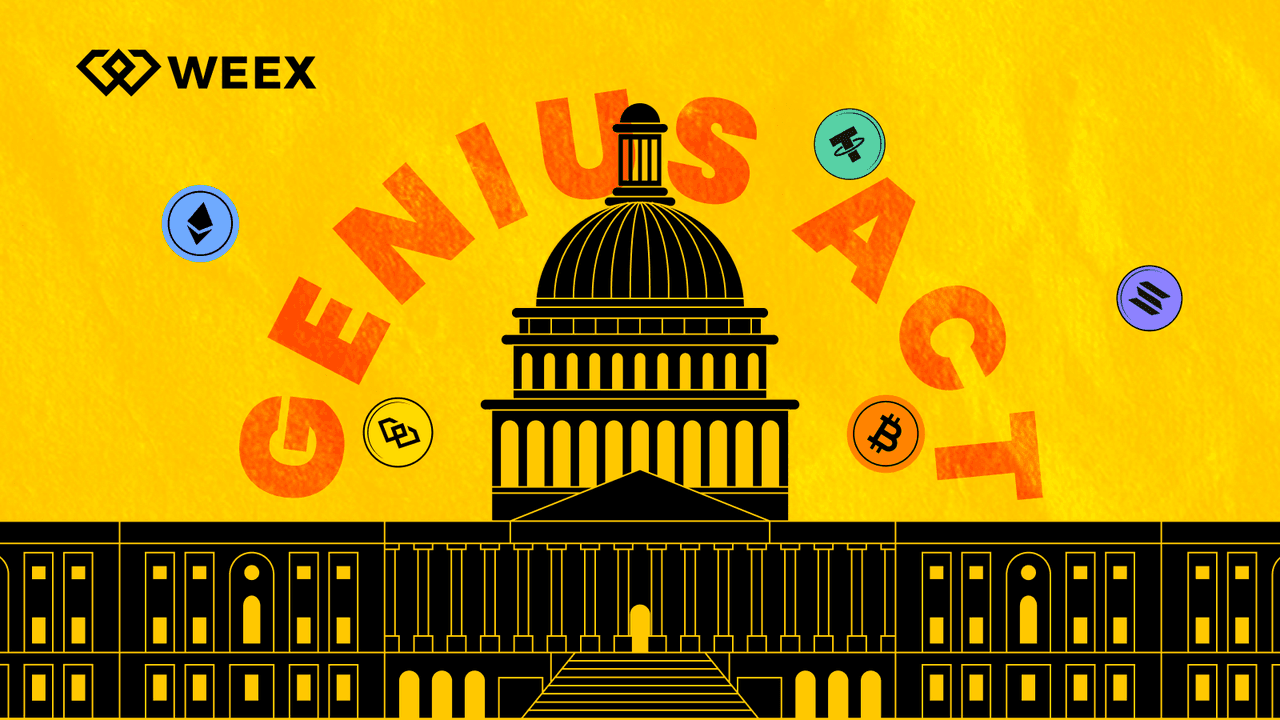
The U.S. GENIUS Act marks the end of blockchain market’s “Wild West” era, transforming dollar-backed digital assets from speculative experiments into regulated pillars of the financial system. By replacing ambiguity with a bank-grade framework, Washington isn’t just setting rules — it is laying the foundation for the next wave of institutional adoption.
Core Provisions
The Act focuses on four key areas: issuance, backing, monitoring, and regulation.
- Issuance by regulated entities only: Only approved banks, licensed non-bank issuers, and qualified state-level institutions are allowed to issue payment stablecoins in the U.S.
- Full reserve backing: Stablecoins must be backed 1:1 by highly liquid, low-risk assets such as cash, insured deposits, or short-term U.S. Treasuries. Riskier assets and rehypothecation are strictly limited.
- Transparency and accountability: Issuers must regularly disclose supply and reserve information, undergo audits, and maintain executive responsibility.
- Legal classification: Payment stablecoins are treated as payment instruments, not securities, placing oversight under banking regulators and ending long-standing jurisdictional uncertainty.
Together, these provisions create a clear, bank-style framework without requiring stablecoin issuers to become full banks.
Positive Impacts on Crypto Markets
The Act catalyzes institutional growth by formalizing stablecoins as core financial infrastructure:
Institutional De-risking: Standardized licensing replaces legal ambiguity, enabling corporations and TradFi to integrate digital assets with operational confidence.
Systemic Trust: Mandatory 1:1 reserves and audits minimize de-pegging risks, while non-security classification provides long-term regulatory certainty.
Utility Expansion: Beyond exchange liquidity, clear rules unlock high-value use cases like B2B cross-border settlements and automated treasury management.
Dollar Primacy: Private-sector innovation extends USD liquidity globally, reinforcing the dollar as the native on-chain settlement currency.
Potential Risks and Structural Side Effects
Concentration Risk: Strict compliance creates high entry barriers, concentrating the market among a few dominant, systemically important players.
Deposit Erosion: Stablecoins compete with traditional banking for settlement, potentially straining bank liquidity during market volatility.
Innovation Stagnation: Narrowly defined reserve and activity rules may limit the evolution of innovative and yield-optimized digital assets.
Redemption Volatility: Rapid, large-scale exits can cause liquidity mismatches, disrupting the broader trading and DeFi ecosystems.
Key Considerations for Investors
As stablecoins become more regulated, investors need to rethink how they assess risk.
- Structure beats brand: Regulatory approval, reserve quality, transparency, governance, and redemption matter more than brand recognition or market capitalization.
- Liquidity matters more than price: The real impact of stablecoin regulation shows in liquidity, on-chain payments, settlement-focused networks, and compliant DeFi infrastructure, rather than short-term price swings.
- Policy is a moving variable: Regulation reduces uncertainty but doesn’t eliminate risk. Future rules like tighter capital requirements or renewed discussions around CBDCs can reshape the competitive landscape.
- Know the rules to trade smarter: Understanding stablecoin rules is essential for informed decisions, as they increasingly influence liquidity, market structure, and long-term viability.
Conclusion
The U.S. Stablecoin Act turns stablecoins into regulated financial infrastructure. It boosts trust, enables institutional adoption, and expands real-world use, while concentrating the market and introducing new risks. Investors should focus on reserve quality, transparency, and governance — stablecoins are no longer just trading tools, but key pillars of the digital financial system.
About WEEX
Founded in 2018, WEEX has developed into a global crypto exchange with over 6.2 million users across more than 130 countries. The platform emphasizes security, liquidity, and usability, providing over 1,200 trading pairs and offering up to 400x leverage in crypto futures trading. In addition to traditional spot and derivatives markets, WEEX is expanding rapidly in the AI era — delivering real-time AI news, empowering users with AI trading tools, and exploring innovative trade-to-earn models that make intelligent trading more accessible to everyone. Its 1,000 BTC Protection Fund further strengthens asset safety and transparency, while features such as copy trading and advanced trading tools allow users to follow professional traders and experience a more efficient, intelligent trading journey.
You may also like

Futu Penalty Shock Exposes Brokerage Risk — Why WEEX TradFi Fits Traders Who Want Faster Global Market Access
Futu stock falls after China penalty news. Learn why FUTU shares dropped, how the latest crackdown affects traders, and why WEEX TradFi offers USDT-margined access to stocks, gold, oil, forex, and indices in one account.

Futu Gets Penalized and FUTU Stock Drops: Why Traders Are Turning to WEEX TradFi for Global Market Exposure
Futu stock drops after China crackdown and penalty news. Learn why FUTU shares fell, how the latest regulatory shock affects traders, and why WEEX TradFi offers USDT-margined global market exposure to stocks, gold, oil, forex, and indices.

Futu Stock Drops After China Crackdown: Why FUTU Shares Fell and What Investors Should Watch in 2026
Futu stock drops after China crackdown and penalty news. Learn why FUTU shares fell, what the latest regulatory action means, and whether Futu stock can recover in 2026.

What is BitClassic (B2C) Crypto? The Experimental hard fork of Bitcoin
What is BitClassic (B2C) crypto? Read our deep-dive BitClassic review to discover the mechanics, mining upgrades, and trading risks of this experimental Bitcoin hard fork.

Oil Crypto Price Prediction 2026: COAR vs USOR vs GDOR vs WCOR, Which Will Be the Highest Oil Crypto?
Oil crypto price prediction 2026: discover the highest oil crypto, current oil crypto rankings, COAR vs USOR vs GDOR vs WCOR, and the best oil crypto to watch now.

Is Rovetan (RVN) Crypto A Scam? Is It A Claude-Coded Fake Website?
Is Rovetan (RVN) crypto a scam? Read our definitive Rovetan exchange review to uncover the red flags of this Claude-coded fake website and protect your funds today.
Where Can I Buy Rovetan (RVN) Crypto? Is It Worth Buying Now?
Where can you buy Rovetan (RVN) crypto? See the latest Rovetan price, market cap, buying options, RVN ticker confusion, and whether Rovetan is worth buying now.
What is Rovetan (RVN) token and How Does It Work?Latest RVN Guide
What is Rovetan (RVN) token and how does it work? Learn the latest Rovetan price, tokenomics, utility, risks, and how to trade RVN on WEEX.

What Is $America250 Token? Huge Gains or Dangerous Meme Coin Scam?
Is the $America250 token a breakout opportunity or a dangerous Solana meme coin scam? Analyze the key on-chain risks, domain safety, and official claims.

GDOR Coin Explained: Price Surge, Oil Narrative, and Solana’s Global Digital Oil Reserve Token
GDOR (Global Digital Oil Reserve) is a Solana oil-themed narrative token. Learn what GDOR coin is, whether it is backed by oil, and key risks before trading.

COAR vs WCOR: How Two Oil Narrative Tokens on Solana Stack Up
COAR vs WCOR comparison: two oil-themed crypto tokens. Learn their differences, tokenomics, price predictions, risks, and which fits your risk profile.
ROAF vs COAR: Two Oil Narrative Tokens Compared on Solana
ROAF vs COAR comparison: two Solana-based oil narrative meme tokens. Learn differences in structure, risks, tokenomics, and market positioning.
What Is Modern American Gas Asset Crypto? MAGA Oil Narrative Explained
Modern American Gas Asset (MAGA) is a Solana meme coin using Trump-era branding and oil narrative. Learn how it works, risks, and the difference from real energy assets.
What Is Chinese Oil Asset Reserve (COAR)? Solana Oil Narrative Token Explained
Chinese Oil Asset Reserve (COAR) is an oil-themed Solana token, not a verified claim to real physical oil ownership
The contract address is CoARSp4P9Yr7MEnKMZE7chyAkK3mNbPFyArdQeMm9a1G
Total supply is 1 billion tokens with distribution including liquidity pool, community, team lock, reserves, and marketing
Stated utilities include staking (12% APY), governance (1 COAR = 1 vote), revenue share (30%), and 2% burn per transaction
Roadmap includes three phases from launch to institutional partnerships and real-world oil reserve verification

How to Buy Mom Trust Fund Reserve (MTFR): Legit Opportunity or High-Risk Trap?
Is MTFR Coin a legit opportunity or a high-risk trap? Read our Mom Trust Fund Reserve buying guide to analyze real on-chain data, liquidity, and key risks.
How to Buy COAR Crypto and When to Sell for Maximum Gains
Learn how to buy COAR Crypto safely on Solana. Read our expert guide on the speculative Chinese Oil Asset Reserve coin and discover strategic buy and sell points.
What Is Global Digital Oil Reserve (GDOR) Coin? Can It Really Explode Like GDER?
What is GDOR crypto? This guide explains its token data, missing fundamentals, and why it is unlikely to replicate explosive tokens like GDER.

What Is SAOS? Strategic American Oil Supply Token Explained
SAOS is a meme token on Solana with a 75,000 USD market cap and 22,000 USD locked liquidity, positioned around oil supply themes but lacking real asset backing
It thrives on pure narrative speculation, with no utility, website, or doxxed team, making it highly volatile and attention-dependent
Traders should distinguish SAOS from legitimate real-world asset projects, as its branding is speculative rather than substantive
Positive aspects include locked liquidity reducing rug pull risks, but low trading activity signals high uncertainty
Futu Penalty Shock Exposes Brokerage Risk — Why WEEX TradFi Fits Traders Who Want Faster Global Market Access
Futu stock falls after China penalty news. Learn why FUTU shares dropped, how the latest crackdown affects traders, and why WEEX TradFi offers USDT-margined access to stocks, gold, oil, forex, and indices in one account.
Futu Gets Penalized and FUTU Stock Drops: Why Traders Are Turning to WEEX TradFi for Global Market Exposure
Futu stock drops after China crackdown and penalty news. Learn why FUTU shares fell, how the latest regulatory shock affects traders, and why WEEX TradFi offers USDT-margined global market exposure to stocks, gold, oil, forex, and indices.
Futu Stock Drops After China Crackdown: Why FUTU Shares Fell and What Investors Should Watch in 2026
Futu stock drops after China crackdown and penalty news. Learn why FUTU shares fell, what the latest regulatory action means, and whether Futu stock can recover in 2026.
What is BitClassic (B2C) Crypto? The Experimental hard fork of Bitcoin
What is BitClassic (B2C) crypto? Read our deep-dive BitClassic review to discover the mechanics, mining upgrades, and trading risks of this experimental Bitcoin hard fork.
Oil Crypto Price Prediction 2026: COAR vs USOR vs GDOR vs WCOR, Which Will Be the Highest Oil Crypto?
Oil crypto price prediction 2026: discover the highest oil crypto, current oil crypto rankings, COAR vs USOR vs GDOR vs WCOR, and the best oil crypto to watch now.
Is Rovetan (RVN) Crypto A Scam? Is It A Claude-Coded Fake Website?
Is Rovetan (RVN) crypto a scam? Read our definitive Rovetan exchange review to uncover the red flags of this Claude-coded fake website and protect your funds today.


