
Crypto All-Stars Presales Launched: A Comprehensive Overview of STARS Listing, Airdrop & Price Prediction




Crypto All-Stars is generating excitement in the crypto world, with its presale surpassing $350,000 in just 48 hours. The project’s unique MemeVault protocol allows users to stake popular meme coins like Shiba Inu, Pepe, and FLOKI, earning rewards in the native $STARS token. With high-yield staking and strong community support, Crypto All-Stars is gaining attention from both meme coin enthusiasts and investors.
This innovative project combines meme coin power with blockchain technology to offer significant rewards. In this article, we’ll explore the $STARS token, its listing, airdrop, and price prediction. Whether you’re a meme coin fan or an investor, Crypto All-Stars presents a promising opportunity in the crypto space.
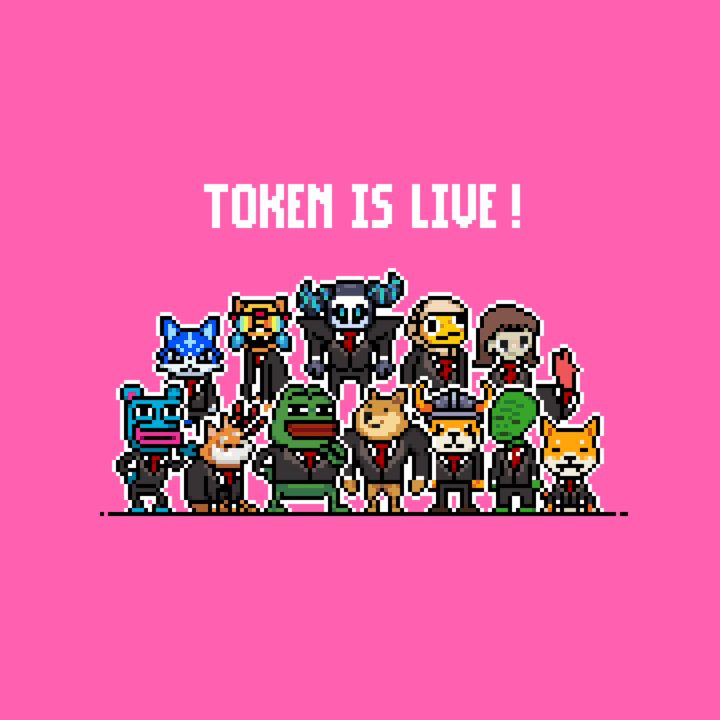
What is Crypto All-Stars?
Crypto All-Stars ($STARS) is an innovative meme coin project that unites top meme coins under a single platform. Through its MemeVault protocol, users can stake popular meme coins like DOGE, SHIBA, BONK, Pepe Coin, and others, earning $STARS tokens as rewards. The project is gaining rapid momentum, with its ongoing presale already surpassing $350,000 in just 48 hours, making it one of the most anticipated meme coin ventures.
The $STARS token is the native currency of the Crypto All-Stars ecosystem, offering multiple utilities such as staking and rewards. As an ERC-20 token, it connects diverse meme coin communities, providing a unified platform for staking assets across different blockchain networks. With its high-yield rewards and innovative approach, Crypto All-Stars is poised to become a major player in the meme coin market, attracting investors and enthusiasts alike.
Key Features of Crypto All-Stars
- MemeVault Protocol: The standout feature of Crypto All-Stars is its MemeVault protocol, which allows users to stake various meme coins and earn rewards in the form of $STARS tokens. The protocol is powered by the ERC-1155 standard, enabling cross-chain staking. This flexibility reduces transaction fees and allows investors to efficiently allocate assets across multiple blockchains.
- High Yield Staking: Holders of $STARS tokens can unlock three times the rewards compared to regular stakers. The MemeVault protocol offers annual staking returns (APY) of up to 401%, with $STARS token holders able to enjoy even higher yields. This incentivizes long-term investment in STARS tokens and strengthens the project's foundation.
- Community Support: Crypto All-Stars has garnered strong backing from renowned analysts like ClayBro and 99Bitcoins. It has also passed security audits by Coinsult and SolidProof, ensuring the platform's reliability and safety for investors. With over 17,000 followers on X platform and 3,000 members on Telegram, the growing Crypto All-Stars community is a testament to the project's potential.
- Market Potential: The project’s presale has already raised an impressive $21 million, and with only 36 hours left to raise funds, the STARS token price is steadily increasing. Analysts predict that the $STARS token could experience massive price growth—potentially up to 100x—once it lists on decentralized exchanges (DEX). This makes Crypto All-Stars one of the most anticipated cryptocurrency projects in the market today.
- Security and Transparency: Crypto All-Stars places a strong emphasis on security. The platform has undergone multiple smart contract audits, ensuring that all transactions are safe and transparent. Investors can trust in the project's commitment to maintaining a secure environment.
When is the Listing of STARS Tokens?
The highly anticipated listing of the STARS token is just around the corner. Following a successful presale phase, the $STARS token will soon be available for trading on decentralized exchanges (DEX). This marks a significant milestone for the Crypto All-Stars project, as it opens up new opportunities for investors to buy, sell, and trade STARS tokens on the open market.
The STARS token listing is expected to drive increased demand for the token, as investors and traders anticipate its future price movements. With the presale price steadily rising, many are eager to see how the $STARS token will perform once it hits the market.

Why Crypto All-Stars is Gaining Popularity
Crypto All-Stars is gaining traction for several reasons:
- Innovative Approach: By introducing the MemeVault protocol and high-yield staking opportunities, Crypto All-Stars has captured the attention of investors who are eager for new ways to stake and earn rewards with meme coins.
- Strong Community Backing: The project has built a loyal following through strategic marketing and solid partnerships, giving it a competitive edge in the crowded meme coin space.
- Exceptional Tokenomics: The presale success, combined with the token’s high potential for growth, makes $STARS tokens highly attractive to investors looking for a high-risk, high-reward opportunity.
STARS Airdrop: How to Participate
One of the most exciting aspects of Crypto All-Stars is its $STARS airdrop campaign. This initiative allows new users to claim free STARS tokens by participating in promotional events.
To participate in the STARS airdrop:
- Sign up for the airdrop through the official Crypto All-Stars website.
- Complete tasks like following social media channels, referring friends, or joining Telegram groups.
- Claim your tokens once the tasks are completed and verified.
The STARS airdrop is a great way for new users to get involved in the Crypto All-Stars ecosystem and start earning STARS tokens without any initial investment.

STARS Price Prediction
With the $STARS token gaining momentum in the presale phase, many analysts believe that its price could skyrocket once it lists on DEXs. Based on current trends and the strong demand for meme coins, the STARS token could see significant gains. Some predictions suggest that the token could increase by 100x post-listing, as it taps into the growing interest in meme coins and DeFi projects.
The long-term outlook for $STARS looks promising, especially if the project continues to build on its strong community, innovative features, and high-yield staking opportunities.
How to Buy Crypto All-Stars ($STARS)?
Buying $STARS tokens is easy, and there are multiple ways to get involved:
- During the Presale: You can purchase STARS tokens at a discounted rate during the ongoing presale. Make sure to check the official website for the presale details and instructions.
- After Listing: Once $STARS tokens are listed on decentralized exchanges, you’ll be able to buy, sell, and trade them directly on platforms like Uniswap, Sushiswap, or others.
To buy $STARS, you’ll need a compatible wallet, such as MetaMask, and some ETH or USDT to swap for STARS tokens.
Conclusion
Crypto All-Stars is quickly establishing itself as a key player in the meme coin space, offering unique staking opportunities, high-yield rewards, and a secure platform for investors. With its MemeVault protocol, strong community support, and the upcoming STARS token listing, the project is poised for significant growth. Don’t miss out on the chance to participate in the $STARS airdrop and get in early on this exciting new project.
The future looks bright for Crypto All-Stars and its $STARS token. As the project continues to gain traction, there’s no doubt that it will become a major force in the world of meme coins. Stay tuned for more updates, and get ready to join the Crypto All-Stars community!
You may also like

SHA-256 vs Other Hashing Algorithms: What’s the Difference
This guide breaks down sha-256 alongside SHA-1, SHA-3, and MD5 in clear terms: what each hash does, where…
What Is SHA-256? How This Hashing Algorithm Works
SHA-256 is a cryptographic hashing algorithm that turns any input—short or long—into a fixed 256-bit output. Think of…
Leverage Trading Risks Every Beginner Should Know
Leverage can amplify gains and losses in crypto derivatives. This guide breaks down why leverage trading carries extra…
How to Calculate Leverage and Position Size?
Leverage lets you control a larger position with smaller capital. This guide shows how to calculate leverage and…
What Is Leverage in Trading? A Complete Guide
Leverage lets you control a larger position with a smaller amount of capital, but it also raises the…
What Is Initial Margin vs Maintenance Margin
Margin trading lets you control a larger crypto position with less capital, but it also introduces liquidation risk.…
What Is a Limit Order? A Beginner’s Guide
A limit order lets you set your own price. Your trade only executes if the market reaches that…
When Market Orders Can Cost You More Than Expected
A market order is simple: you click buy or sell, and the trade executes at the best available…
Market Order vs Limit Order: Which Should You Use
Choosing between a market order and a limit order comes down to one trade-off: speed versus price. This…
What Is a Market Order? A Beginner’s Guide
A market order is the simplest way to buy or sell: you tell the exchange to execute immediately…
Is SHA-256 Still Secure in 2026?
Updated: 2026-07-08 SHA-256 underpins Bitcoin mining, block integrity, and countless wallets and exchanges. This article explains whether SHA-256…
How SHA-256 Secures the Bitcoin Blockchain
SHA-256 is the cryptographic hash function that powers Bitcoin’s proof-of-work and the chain of blocks. This article explains…
What Happens When You Get Liquidated on Leveraged Trades?
Leverage lets you control a large position with a small margin, but it also narrows the price move…
How Margin Calls Work and How to Avoid Them
Margin trading lets you borrow against your collateral to amplify exposure, but it also introduces the risk of…
Margin Trading vs Spot Trading: What’s the Difference
Margin trading lets you borrow funds to amplify exposure, while spot trading uses only your own capital to…
What Is Margin Trading? A Beginner’s Guide
Margin trading lets you use your own funds as collateral to borrow extra capital, so you can take…
What is The White Bull (LEVI) Coin? Everything You Need to Know Before Trading LEVI/USDT
This article explains what The White Bull (LEVI) is, why it’s drawing attention on Solana, and how LEVI/USDT…
Should You Store Large Crypto Holdings in a Cold or Hot Wallet
Choosing between a cold wallet and a hot wallet is not just a preference—large crypto holders face a…
SHA-256 vs Other Hashing Algorithms: What’s the Difference
This guide breaks down sha-256 alongside SHA-1, SHA-3, and MD5 in clear terms: what each hash does, where…
What Is SHA-256? How This Hashing Algorithm Works
SHA-256 is a cryptographic hashing algorithm that turns any input—short or long—into a fixed 256-bit output. Think of…
Leverage Trading Risks Every Beginner Should Know
Leverage can amplify gains and losses in crypto derivatives. This guide breaks down why leverage trading carries extra…
How to Calculate Leverage and Position Size?
Leverage lets you control a larger position with smaller capital. This guide shows how to calculate leverage and…
What Is Leverage in Trading? A Complete Guide
Leverage lets you control a larger position with a smaller amount of capital, but it also raises the…
What Is Initial Margin vs Maintenance Margin
Margin trading lets you control a larger crypto position with less capital, but it also introduces liquidation risk.…