
TVL increased fivefold in one month, is AC going to turn Sonic into the new DeFi yield farming paradise?


During a time when other chains focus on the MeMe market and are continuously drawn to various sudden events, Sonic Labs, formerly Fantom, has been focusing on DeFi development. Sonic has announced several new measures to incentivize DeFi projects in its ecosystem, resulting in a 500% increase in Sonic's TVL in the past month. What has Sonic done, and how can retail investors participate in the Sonic ecosystem?
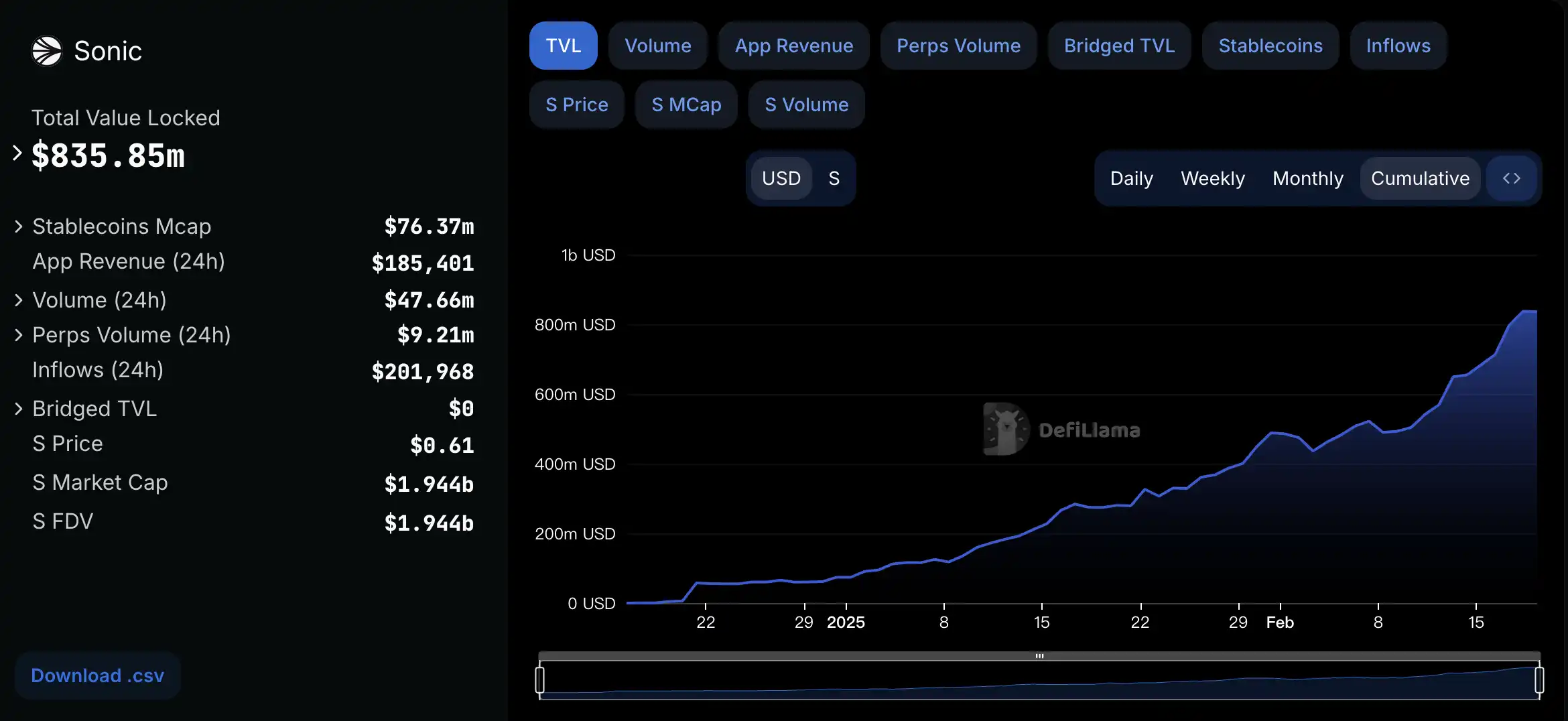
Main Chain, New Layout: What Has AC Brother Done Since Sonic's Return?
In 2021, Fantom was highly successful, with its TVL reaching as high as $8 billion. However, after the departure of Chief Developer Andre Cronje and the end of DeFi Summer, Fantom gradually faded into obscurity. With AC's return at the end of last year, the Fantom brand was upgraded to Sonic, and the former star team used new technology to build a new chain, which indeed achieved good results in the first two months after release.
During these two months, $110 million in external funds flowed into Sonic, with Solana accounting for the majority, followed closely by Base and ETH. The DEX trading volume on Sonic also surpassed the $1 billion mark.
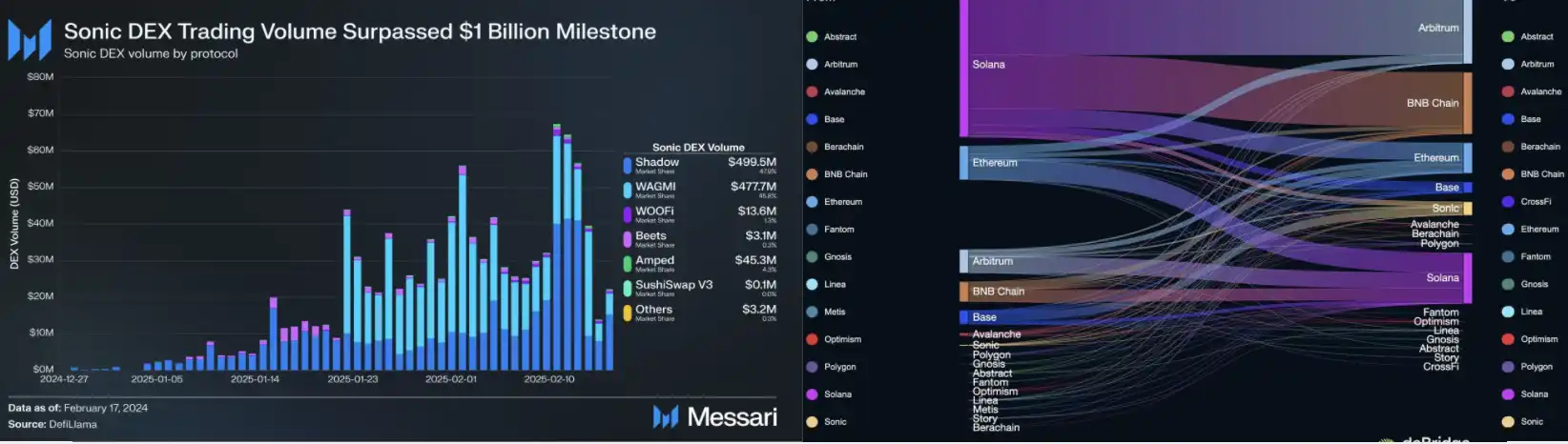
How did Sonic achieve this? For a DeFi chain, the liquidity pathway is essential.
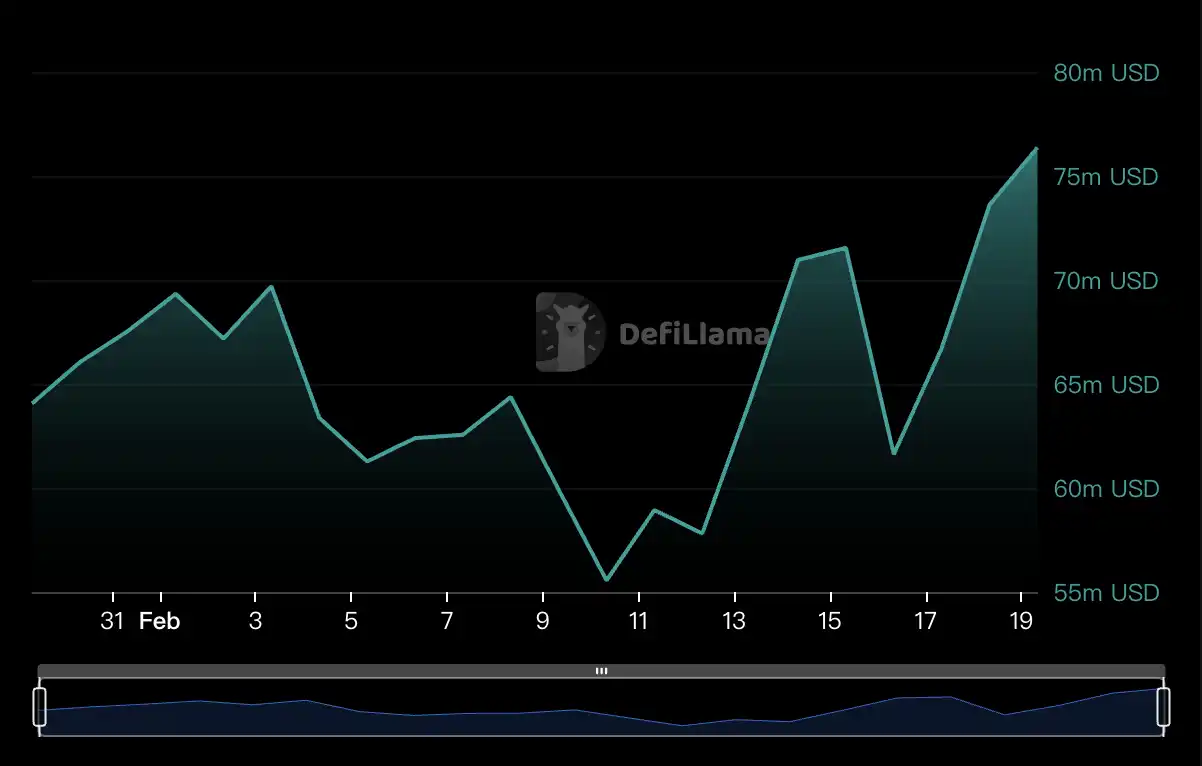
After integrating USDT into Sonic, the total stablecoin market value has increased by 32%, and the current total market value of stablecoins such as USDT, USDC, scUSD, stkscUSD, and USDC.e has reached $76 million.
$S has now been bridged to Solana but has not yet deeply interacted with Solana's DeFi protocols, leading to relatively low liquidity in the $S pool. Continued observation is recommended for potential future collaborations between Sonic and Solana's DeFi protocols.
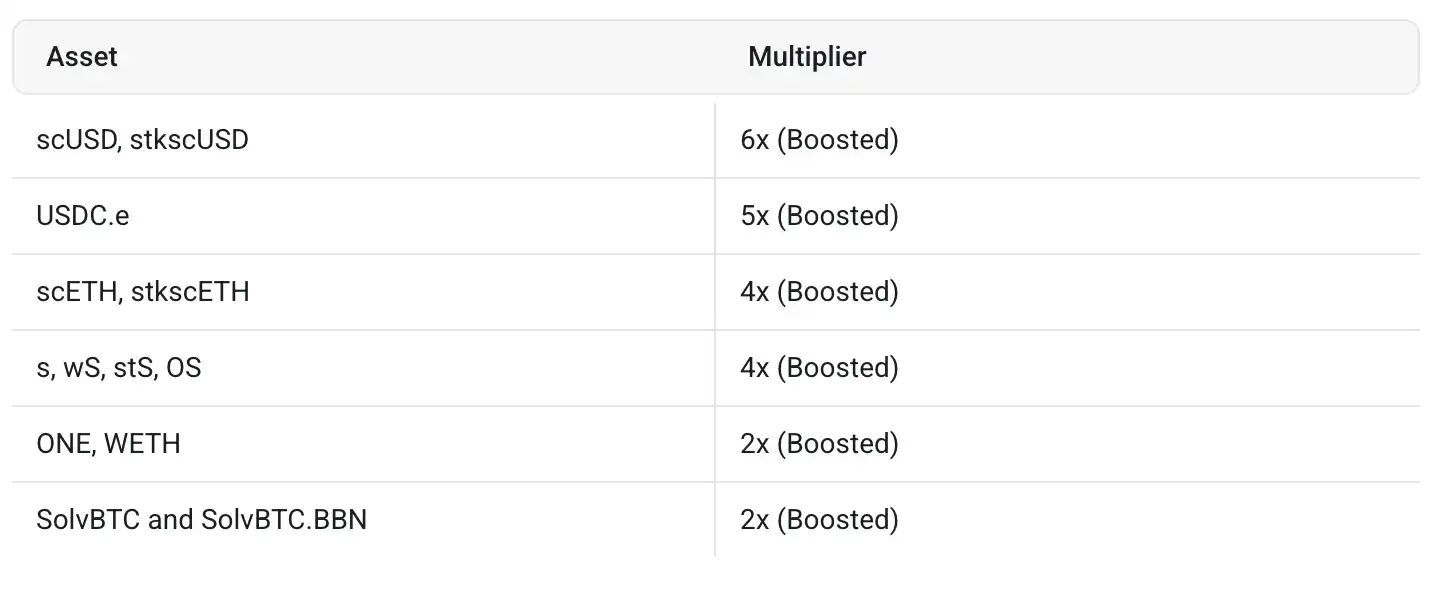
Sonic has leveraged a nested staking model through three DeFi protocols to bring users leveraged earnings, bringing BTC and ETH liquidity into Sonic under a mutually beneficial scenario.
Lombard Finance: Lombard Finance is a key player in Bitcoin-focused DeFi, most notably launching LBTC, a liquid staking version of Bitcoin. By staking BTC with Lombard, users receive a 1:1 "LBTC" reward.
Ether.fi: Ether.fi is a decentralized Ethereum staking protocol that allows users to stake Ethereum (ETH) directly and receive staking rewards. Ether.fi has partnered with Lombard to launch the first Bitcoin-backed staking token "eBTC."
eBTC uses LBTC as collateral in the background, allowing eBTC holders to potentially earn multi-tiered rewards as they benefit from both LBTC staking rewards (backed by actual Bitcoin) and Ether.fi's staking strategies on Ethereum. eBTC can also be deposited into Rings on Ethereum to mint scBTC.
Rings Protocol: A project on Sonic that enables users to deposit various tokens — from stablecoins to Ethereum and Bitcoin derivatives — and mint interest-bearing "sc" version assets (such as scUSD, scETH, and scBTC) by staking Bitcoin-based assets like LBTC, eBTC, and wBTC. Users can deposit these assets into Rings Protocol, mint scBTC, and use or stake them on Sonic to earn weekly rewards. Rings leverages Veda Labs' farming strategies to generate yield using deposited assets across Ethereum and protocols on Sonic.
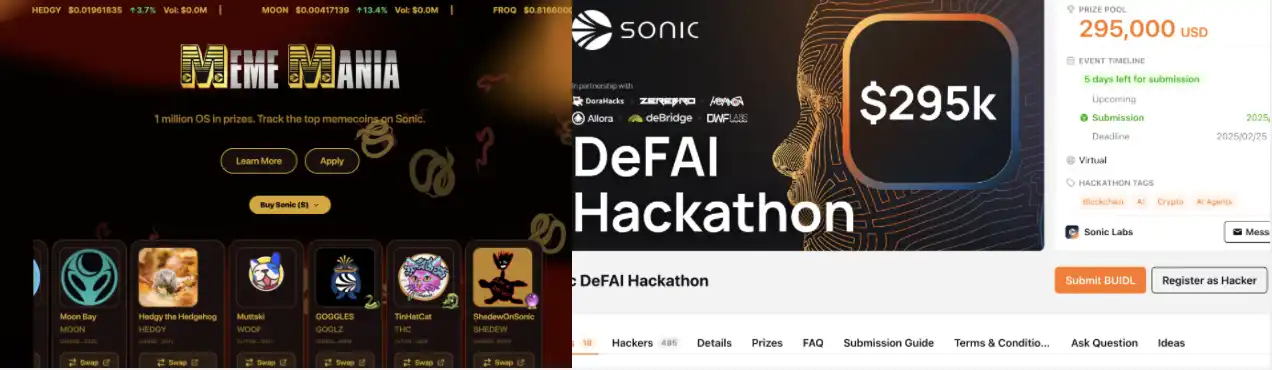
Sonic DeFAI Hackathon, Sonic Meme Mania Competition
The hackathon offers a prize pool of $295,000 worth of $S to support AI agents building social and on-chain operations on Sonic. It has attracted 18 AI projects and garnered the attention of 485 technical enthusiasts with a registration deadline of February 25th.
A total of $1 million in $OS is allocated as prizes, with the highest market value among participants approaching $7 million. Sonic's meme coin infrastructure is relatively underdeveloped, and it remains to be seen whether, while driving DeFi as the fastest blockchain, it will also follow Solana's strategy to expand meme user base.
Additionally,
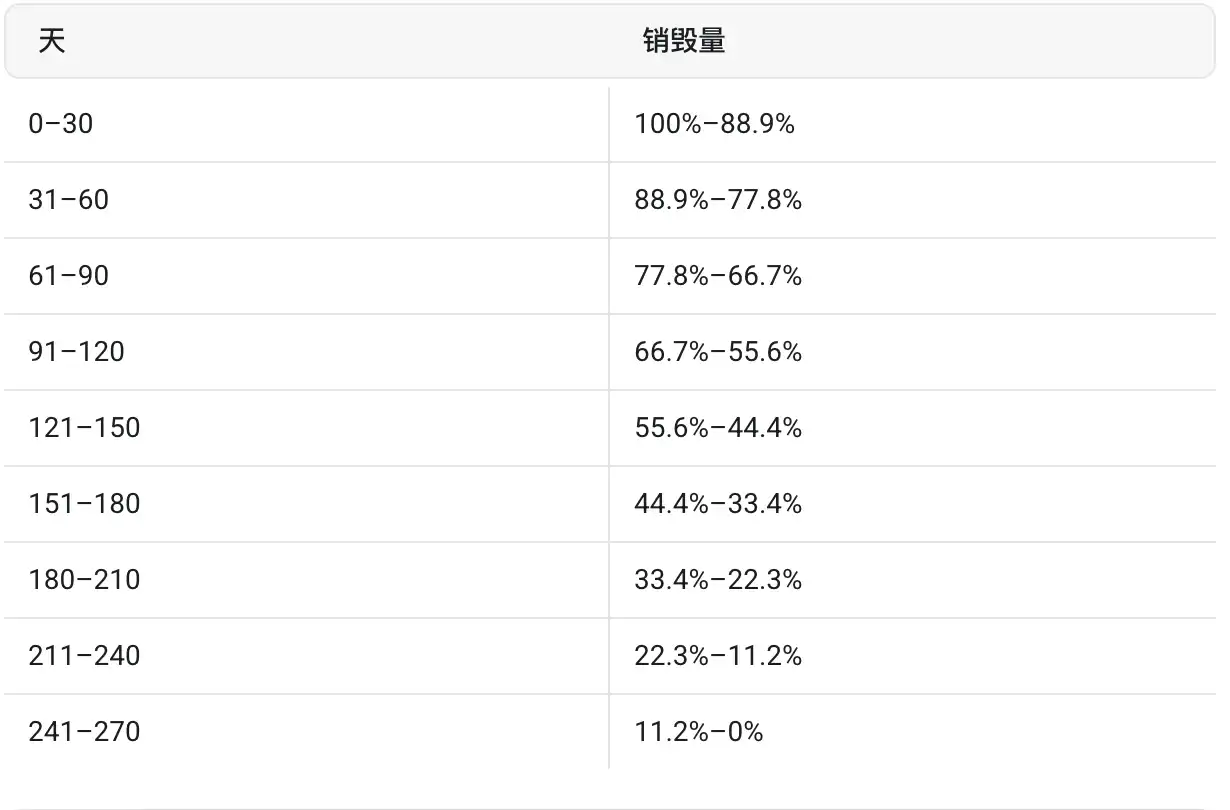
Sonic plans to release a total of 200 million $S tokens over a 1-year period, with the first season lasting 6 months, representing 40-60% of the airdrop total supply. Of these, 25% of the airdrop is for immediate circulating tokens, and 75% is for tradable locked NFT certificates. Users can trade NFTs and, following the unlock schedule in the table below, partially burn them for $S liquidity to unlock them early. The flexible airdrop unlock model has attracted many users.
What Opportunities Does the Sonic Ecosystem Offer Amidst the Widely Circulated High Returns?
Airdrop
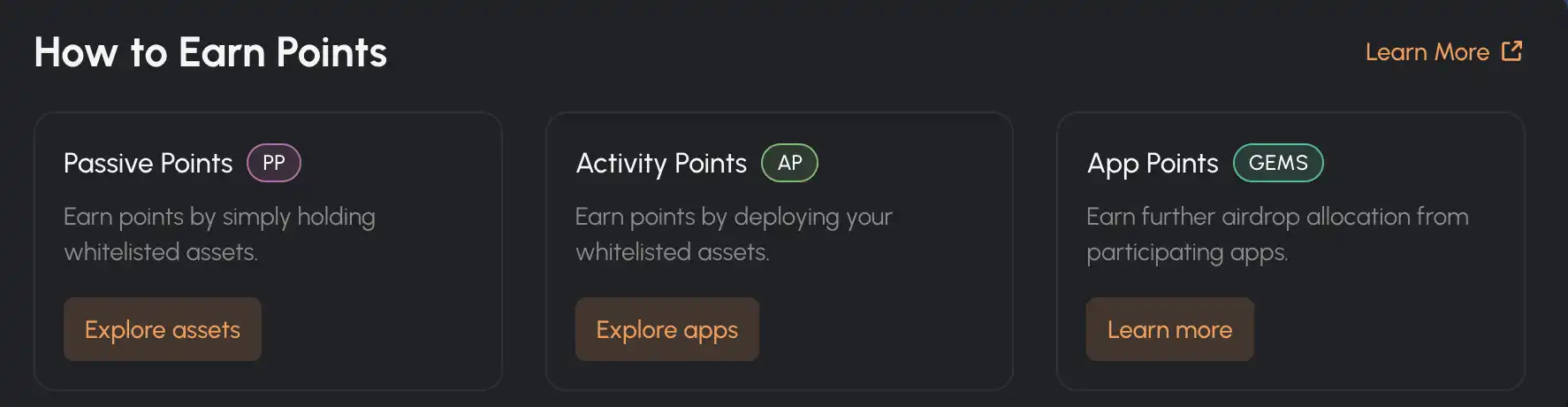
There are currently three ways to earn airdrop points: Passive Points (PP) only require holding whitelist assets in a Web3 wallet. Activity Points (AP) require providing whitelist assets in a project as liquidity. DApps Points (Gems) are distributed to ecosystem developers based on their contributions to the ecosystem.
According to on-chain analyst @phtevenstrong,
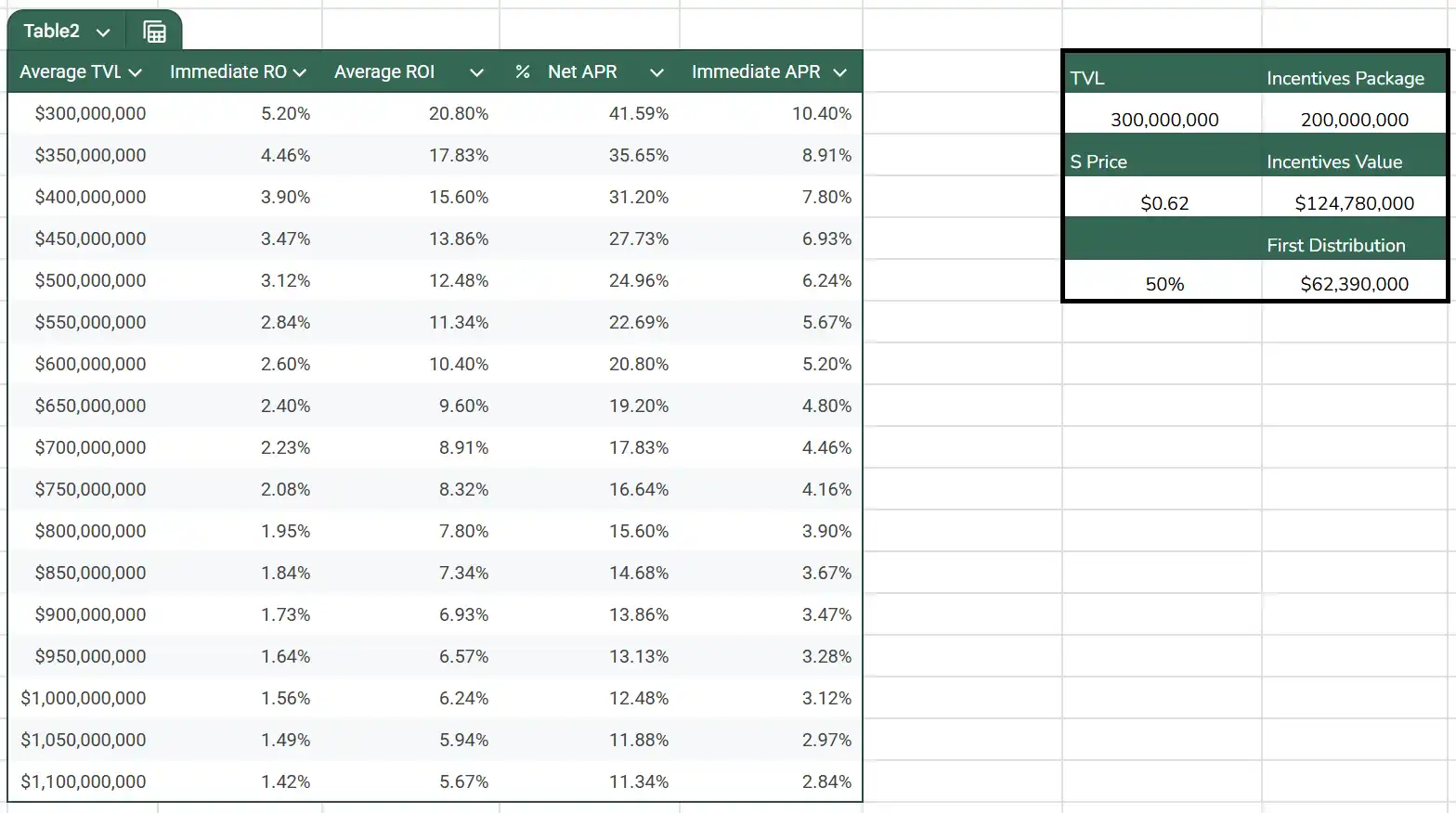
The $S token currently has a fully circulating supply with no VC shares, eliminating dilution risk. Close to half of the liquidity is currently locked, with 31% of the total supply staked and an additional 5-10% of $S locked in DeFi protocols. Assuming a 50% airdrop in six months, we need to estimate the average TVL for that period.
$300M TVL → Additional +20% APR
$500M TVL → Additional +12.5% APR
Base Points Farming Strategy
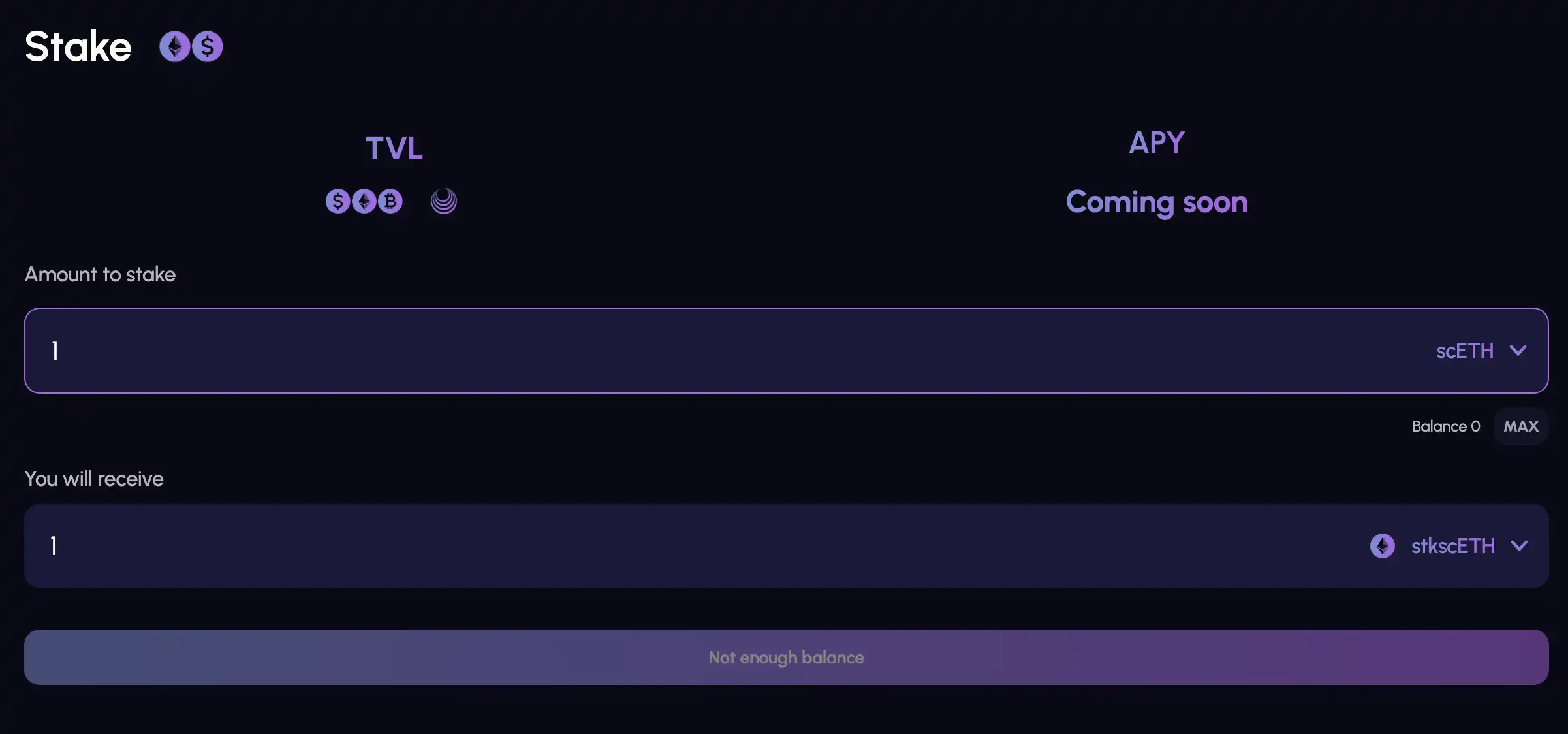
Rings Protocol's scETH Loop strategy: Staking ETH on the Rings Protocol to mint interest-bearing scETH. Borrowing: Collateralizing scETH on the Euler platform to borrow Wrapped Ether (WETH) with a 91.5% loan-to-value ratio (LTV). Leveraging: Reinvesting the borrowed WETH to potentially achieve 10x leverage. Expected Returns: Without considering Rings points and rEUL rewards, the theoretical annualized percentage yield (APR) can reach 87.49%.
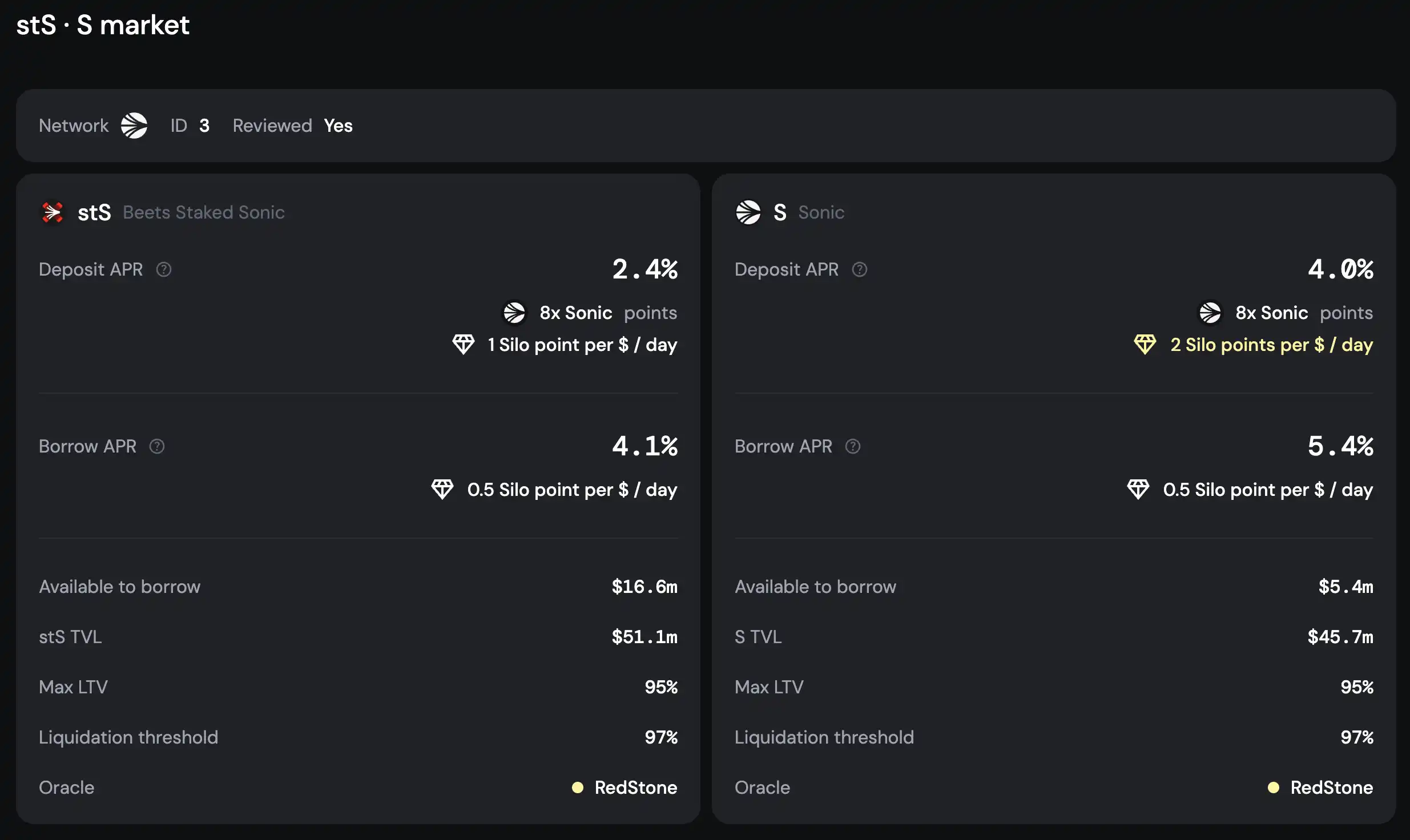
Silo Finance's stS/S Hedge Loop strategy: 1. Borrowing: Borrowing stS tokens on Silo Finance with a 95% LTV, achieving 20x leverage. 2. Staking: Staking the borrowed stS tokens to earn 2.4% lending yield and 5.3% staking yield. 3. Points Reward: Layering a 10% points reward to enhance overall returns. Expected Returns: Base yield is 7.7%, plus a 10% points reward, totaling 17.7%. The full strategy's APR can reach 74%.
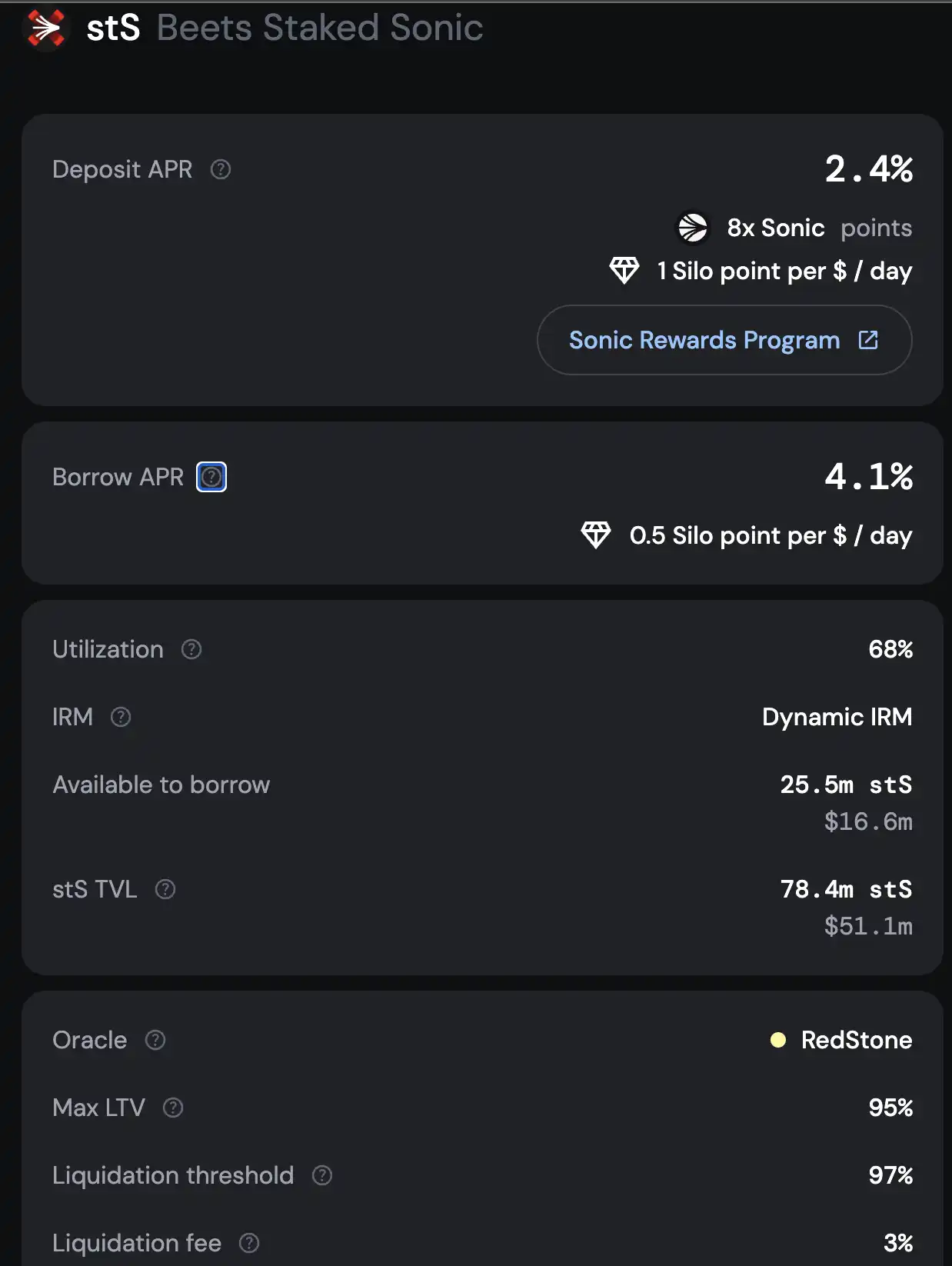
Reverse Hedge Arbitrage Strategy 1. Borrow: Borrow stS tokens on Silo Finance to receive an 8x points bonus. 2. Lend: Lend out stS tokens to earn a 4.1% lending yield. 3. Points Reward: Earn 0.5 Silo points daily to further enhance returns. Expected Returns: Base return of 4.1% plus the daily 0.5 Silo points reward to boost overall yield.
After the MeMe market gradually calmed down, DeFi returned to the mainstream spotlight. Sonic, a DeFi-focused project, has seen excellent growth in the first three months, integrating the DeFai concept. Facing the pressure of hype and the subsequent emergence of Monad, Sonic aims to establish a solid foothold using its high-performance chain and AI to create a new DeFi paradigm. It is expected to bring new vitality to the market with more interesting innovations amidst the fierce competition among numerous projects.
You may also like

Meet the new WEEX trial fund—your gateway to greater profits

WEEX Labs Lands at Dutch Blockchain Week: A Disruptive Crypto × AI Conversation Sets Sail in Amsterdam

SK Hynix Reportedly Plans U.S. ADR Listing as Early as August, With SEC Approval Possible in Late June
SK Hynix may pursue a U.S. ADR listing as early as August, with SEC approval reportedly possible in late June amid strong AI chip supply chain demand.

SpaceX vs Tesla vs xAI: Which Elon Musk Trade Has the Biggest Upside in 2026?

OpenAI Reveals It Has Confidentially Submitted an S-1 to the SEC, Keeping the Door Open for a Future IPO
On June 9, according to an OpenAI announcement, the company recently confidentially submitted a draft S-1 registration statement to the U.S. Securities and Exchange Commission (SEC), beginning the preliminary compliance process for a potential initial public offering. OpenAI said it chose to disclose this proactively because it expected the news might leak; however, the company has not yet set a specific listing timeline, and related arrangements may still take some time.

Latest research from 13 top universities including Cornell University: The current state, challenges, and misconceptions of the fusion of Crypto and AI
Deconstructing Anthropic: The Best AI Company, Possibly Also a Type of Organizational Invention
Apollo and Blackstone Reportedly Back $35 Billion Anthropic Chip Financing as Deal Details Remain Unclear
On June 9, according to currently available news alerts, Apollo and Blackstone Group participated in a $35 billion financing for an Anthropic “chip project.” Based on the original wording of the report, the funding has already been raised, but public information remains limited. The financing structure, use of proceeds, project entity, and whether Apollo and Blackstone participated through equity, debt, or project financing have not yet been disclosed.

Humanity Protocol Security Incident Escalates: More Than $31 Million Stolen From Related Addresses as Attacker Continues Selling H for ETH
On June 9, according to monitoring by Onchain Lens, more than $31 million has been stolen from addresses linked to Humanity Protocol, and the attack is still ongoing, with the hacker continuously swapping H tokens for ETH. Project founder Terence Kwok later confirmed the security incident on X, saying the issue involved a private key leak.

Bloomberg: As Bitcoin Weakens, Stablecoins and RWA Continue to Drive Expansion in Crypto Businesses
In June, Bloomberg reported that despite Bitcoin falling below $60,000 last week, wiping out about $235 billion in market value within seven days, and dropping close to 50% from last year’s peak, some core businesses in the crypto industry are still expanding, mainly in stablecoins, real-world asset tokenization (RWA), payments, and infrastructure. The report also noted that overall altcoin activity has contracted significantly: altcoin market capitalization has fallen from a peak of about $431 billion in November 2021 to around $170 billion, and among the tens of millions of tokens issued in recent years, fewer than 1,700 still maintain meaningful trading activity.

Galaxy Deep Research Report: How Hyperliquid's HIP-4 Upgrade Changes the Landscape of Prediction Markets?
Binance Research: RWA Market Expected to Expand Nearly 6x from Early 2025, with Public Equities and Onchain Payments Heating Up Together
In June, Binance Research said in its monthly market report that the real-world asset (RWA) market is expected to grow by about 589% from the beginning of 2025. Bond- and money market fund-related RWA expanded by about $6.5 billion, up 83% year over year, while publicly traded equity RWAs grew by about 422%. The report also noted that monthly crypto debit card transaction volume exceeded $747 million in May, up 48.6% year to date.

Japan to Assess a Framework for Yen Stablecoins and Crypto ETFs as Asia’s Compliant Payments Narrative Heats Up
Recently, according to the original report, Japan is considering the launch of yen stablecoins and cryptocurrency ETFs. Public information remains limited at this stage, and there is still no complete policy text, regulatory draft, or clear implementation timeline, so this is better characterized as a “policy discussion” rather than formal implementation. The original wording also noted that advancing stablecoin regulation in Asia is driving XRP usage and supporting growth in the XRPL ecosystem. However, based on currently available public information, there is not enough evidence to directly establish a clear causal relationship between this round of discussion in Japan and XRP or XRPL.

ZachXBT: Humanity private key leak and abnormal surge in H token should be viewed separately
On June 9, according to related disclosures, on-chain investigator ZachXBT posted an update on Humanity’s roughly $31 million security incident, saying that after further analyzing fund flows, he currently tends to believe the project team was not involved in an “inside job” or a self-staged attack. According to him, the official explanation about the private key leak was broadly accurate, but before the token unlock, the price of H had been artificially pushed higher, and the hacker later took advantage of that market environment; therefore, the private key leak and the earlier abnormal price pumping should be regarded as two separate and independent events. This reframing has shifted the market’s understanding of the nature of the incident. Earlier discussion around Humanity had focused on whether the team directly participated in the attack or used the security incident to cover up internal operations. ZachXBT’s latest remarks shift the focus from “whether it was self-theft” to “whether there were pre-unlock market structure issues.” He also questioned whether the team may have.

Morning Report | OpenAI has submitted an S-1 registration statement draft to the U.S. SEC; Morpho completes $175 million financing

Morning Report | BitMine increased its holdings by 126,971 ETH last week; trader Eugene announced his exit from the crypto market

Wang Chuan: How can one not feel anxious after the neighbor Old Wang made thirty times profit by investing in storage stocks? (Seven) - A quarter-century cycle
Cryptocurrency CEXs are flocking to sell US stocks, and traditional brokerages are facing an "uninvited guest."
Meet the new WEEX trial fund—your gateway to greater profits
WEEX Labs Lands at Dutch Blockchain Week: A Disruptive Crypto × AI Conversation Sets Sail in Amsterdam
SK Hynix Reportedly Plans U.S. ADR Listing as Early as August, With SEC Approval Possible in Late June
SK Hynix may pursue a U.S. ADR listing as early as August, with SEC approval reportedly possible in late June amid strong AI chip supply chain demand.
SpaceX vs Tesla vs xAI: Which Elon Musk Trade Has the Biggest Upside in 2026?
OpenAI Reveals It Has Confidentially Submitted an S-1 to the SEC, Keeping the Door Open for a Future IPO
On June 9, according to an OpenAI announcement, the company recently confidentially submitted a draft S-1 registration statement to the U.S. Securities and Exchange Commission (SEC), beginning the preliminary compliance process for a potential initial public offering. OpenAI said it chose to disclose this proactively because it expected the news might leak; however, the company has not yet set a specific listing timeline, and related arrangements may still take some time.
Latest research from 13 top universities including Cornell University: The current state, challenges, and misconceptions of the fusion of Crypto and AI


