
Stealthy Financial War? Iran Collects Strait Transit Fees in Stablecoin

Original Title: "Covert Financial Warfare? Iran Collects Hormuz Toll in Stablecoin"
Original Author: Mahe, Foresight News
On April 2, Iran's Deputy Foreign Minister Abadi confirmed during a routine press conference in Tehran that all supertankers passing through the Strait of Hormuz must pay a toll to the Islamic Revolutionary Guard Corps (IRGC) and explicitly ruled out USD settlement. This statement formalized rumors circulating in the shipping world, revealing that Iran is no longer content with traditional tools of geopolitical maneuvering but has instead transformed control of the strait into a financial experiment targeting US dollar hegemony.
The implementation speed of the toll mechanism exceeded market expectations.
Bloomberg cited internal documents from the IRGC Navy, indicating that the system had completed technical deployment by the end of March. Iran has only provided two options for receiving the toll: RMB wire transfer or settlement in USD stablecoins via a decentralized network.
Iran's customs department has established a dedicated cryptocurrency exchange window on Qeshm Island to ensure funds are quickly converted to rials or transferred to overseas accounts upon receipt.
This arrangement has been carefully designed.
Traditional international shipping settlements rely on the SWIFT network and correspondent banking system, where any transactions involving Iran trigger secondary sanctions from the US Treasury Department. In contrast, the combination of the RMB cross-border payment system and a public blockchain network has created a parallel channel that bypasses USD monitoring.
According to London-based shipbroker Braemar, at least two oil tankers flying under unspecified flags completed RMB payments by the end of March and safely navigated through the strait. The Iranian Parliament's National Security Committee endorsed this mechanism at the domestic legal level with the "Strait of Hormuz Transit Management Act," passed on March 30.
It is worth noting that Iran has differentiated fees for vessels based on their geopolitical affiliations.
Bloomberg cited insider information on the oil toll rates in the Strait of Hormuz, starting at $0.5 per barrel, segmented into 5 tiers based on the country's relationship.
The first tier offers a discounted rate to allies, such as China and Russia, priced between $0.5-$0.7 per barrel, with a dedicated fast-track lane for easy passage with regular reporting.
The second tier is Friendly Partners, such as India, Pakistan, and other countries, at $0.8-0.9 per barrel.
The third tier is Neutral Countries, including African countries, Southeast Asia, and Latin America, at $1 per barrel. They need to declare, undergo inspection to ensure no hostile assets, and then they are allowed to pass.
The fourth tier is High-Risk Countries, closely allied with the US but not engaged in hostile activities against Iran, such as Japan, South Korea, and many EU countries, at $1.2-1.5 per barrel. Iran needs to be monitored throughout the journey, and the inspection queue will be longer.
The fifth tier is the US, Israel, and allies, who are not allowed passage.
Once a Very Large Crude Carrier pays the toll, the Islamic Revolutionary Guard Corps of Iran issues a permit code and route instructions. The vessel must fly the flag of a negotiating passage agreement country, and in some cases, the vessel's formal registration must be changed to that country. As the vessel approaches the Strait of Hormuz, it needs to broadcast its passage password via VHF radio, after which a patrol boat will approach and escort it through the strait, hugging the coastline and passing between a set of islands known in the industry as the "Iranian tollbooth."
This is the first time a sovereign nation has included a stablecoin in its strategic payment infrastructure.
Unlike El Salvador's symbolic move to make btc-42">Bitcoin legal tender, Iran's choice is a mandatory commercial scale. The strait handles 21% of global crude oil shipping volume, with dozens of ships passing through daily.
If this mechanism continues to operate, it is estimated that over $20 billion in stablecoins will flow through Iran-controlled digital wallets annually, creating a gray liquidity pool protected by sovereign power.
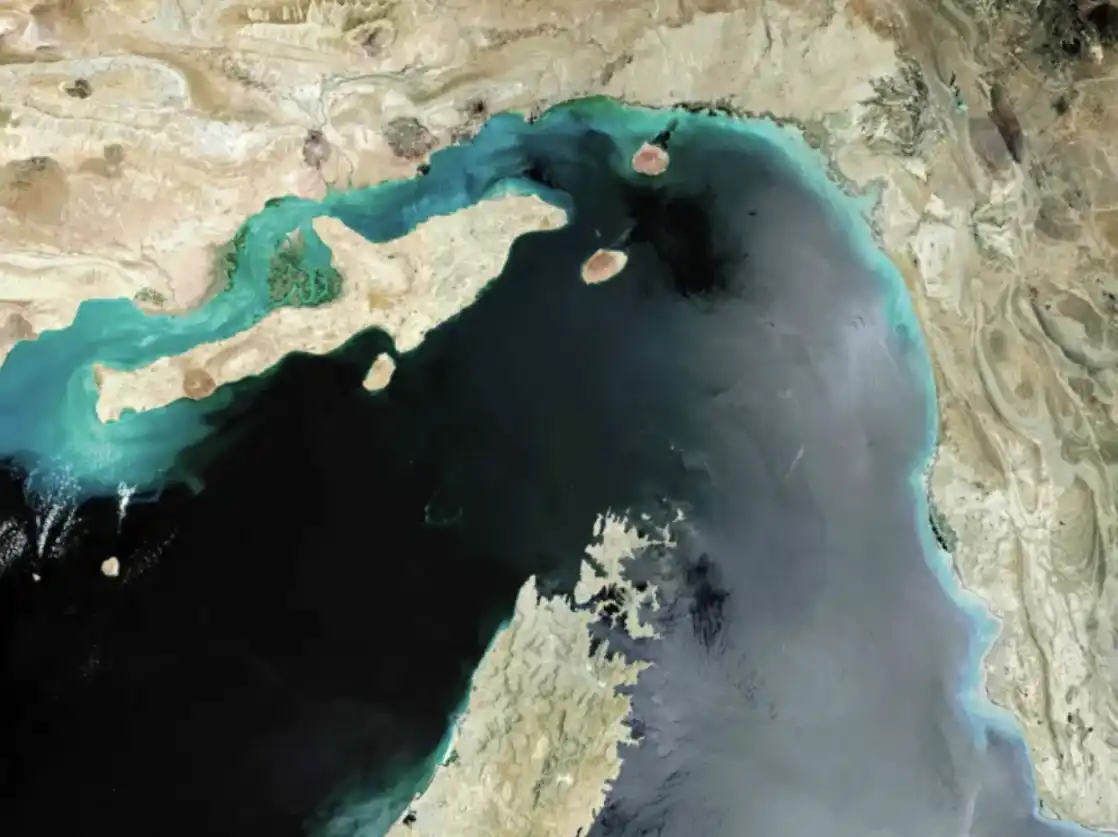
The deeper impact lies in the cascading effects on shipping insurance and trade finance. The International Group (IG) of P&I Clubs has issued an internal warning, stating that paying fees to the IRGC may trigger EU and UK sanctions compliance risks, leading to policy invalidation. This forces shipowners to make a harsh choice between maritime economics and legal risks: bypassing the Cape of Good Hope adds 15 days of travel time and tens of thousands of dollars in fuel costs, while paying the cryptocurrency passage fee entails the risk of account freezing. Some bulk commodity traders are starting to try rerouting through Pakistani intermediaries, as Islamabad recently announced allowing 20 international tankers to fly the Pakistani flag, essentially providing an offshore outsourcing channel to the Iranian system.
Iran is not the only country doing this. Russia had previously announced a similar fee policy for the Northern Sea Route and openly considered accepting cryptocurrency settlements. This digital financial logic of 'node-izing' key geographical hubs is reshaping the payment infrastructure of global energy trade.
When a commercial vessel settles in the Gesundrian Anchorage using an on-chain protocol for USDT, what is completed is not just a toll payment, but also a systemic unloading of the residual architecture of the Bretton Woods system.
The fragility of this experiment is equally evident. As USDT/USDC is fundamentally still pegged to the dollar and subject to OFAC tracking, the shadow public of the Islamic Revolutionary Guard Corps exchanging at scale in a "decentralized" fashion to real-world assets or fiat (rial) poses a risk. However, as long as Iran maintains its geographical monopoly over the Strait of Hormuz, this crypto-mediated financial warfare will continue to rewrite the rulebook of global trade.
You may also like

New gameplay for participating in initial offerings on cryptocurrency exchanges

Why Is Bitcoin Down Today? What the Hawkish FOMC Means for SpaceX, Gold and Nasdaq

OKX Star analyzes Binance's competitive advantages: when regulation levels the playing field, competition has just begun

Full version of the debut Q&A! Federal Reserve Chairman Waller: Sticking to the 2% inflation target, establishing five special working groups, individual did not submit the dot plot

From Disruptor to Shadow Market: The Crypto Market is Becoming a Colony of Traditional Finance

Dalio's important long article: How to position in the current market environment?

DeepSeek Financing Story

Morning Report | Illinois signs the strictest digital asset tax law in the U.S.; RWA tokenization market size surpasses $43 billion, institutions accelerate the migration of on-chain assets
Morning Report | DeepSeek completes over $7 billion in financing, with a valuation exceeding $50 billion; Musk's personal wealth has surpassed the total market value of Bitcoin

Cursor, why did you get on Musk's spaceship?
In the name of charity, for the benefit of the family: How the Trump family turned charity into profit?

Will Gold Break $4,500 After Tonight's Fed Decision? What XAUT and PAXG Traders Need to Know
SharpLink CEO: How to understand that Ethereum developers have just surpassed 1 million?

Morning Report | MiCA grace period expires on July 1; Kalshi's trading volume in the first week of the World Cup breaks $5.1 billion, setting a record

The foundation of SpaceX's trillion-dollar valuation: Who is dividing Musk's annual capital expenditure of tens of billions?
How to exit after asset tokenization?
The stablecoin positioning battle escalates: When compliance is just a ticket to entry, will USD1 become the biggest winner?

A16Z: The sun bears witness, SpaceX is worth 7.5 trillion
New gameplay for participating in initial offerings on cryptocurrency exchanges
Why Is Bitcoin Down Today? What the Hawkish FOMC Means for SpaceX, Gold and Nasdaq
OKX Star analyzes Binance's competitive advantages: when regulation levels the playing field, competition has just begun
Full version of the debut Q&A! Federal Reserve Chairman Waller: Sticking to the 2% inflation target, establishing five special working groups, individual did not submit the dot plot
From Disruptor to Shadow Market: The Crypto Market is Becoming a Colony of Traditional Finance
Dalio's important long article: How to position in the current market environment?

Popular coins
Latest Crypto News


