
Risk Warning: Examining the 'Politicization' Scam of Cryptocurrencies Through LIBRA

Original Title: "Risk Alert | Understanding the 'Politicized' Cryptocurrency Scam through LIBRA"
Original Source: SlowMist Security Team
Background
In recent years, an increasing number of politicians have ventured into the cryptocurrency field, issuing digital currencies under the guise of "national economic revitalization" or "innovation," among other pretexts, in an attempt to endorse tokens through the "celebrity effect" and promote the popularization of cryptocurrency. Although these tokens claim to be driving economic reform and technological innovation, they often conceal significant risks, becoming a "wealth trap" for speculators and ordinary investors. From TRUMP launched by the Trump family to the recently controversial LIBRA, these politicized cryptocurrencies have undoubtedly become the focus of the market. However, at the same time, they have also brought about significant security risks and the potential for a financial crisis.
As a company focused on blockchain security, we will use LIBRA as an example to reveal the potential risks of these politicized cryptocurrency projects and provide users with clearer security alerts.
The “Politicized” Cryptocurrency — LIBRA
On February 15, Argentine President Milei launched a Memecoin named LIBRA, claiming that this would help promote the revival of the Argentine economy and publicly released the related contract address. After the announcement, numerous Memecoin enthusiasts rushed to participate in the project, causing LIBRA's price to skyrocket rapidly, with a market cap peaking at nearly $5 billion. However, just hours after the token was launched, the project team withdrew liquidity, causing the market cap to plummet rapidly to $590 million, resulting in significant losses for investors. Following the incident, Milei deleted the relevant promotional tweets, claiming to be unaware of the specific details of the LIBRA project, and announced the initiation of an anti-corruption investigation. As the situation unfolded, not only did lawyers file a lawsuit against Milei for alleged fraud, but it also sparked calls from the political opposition for impeachment proceedings against him.
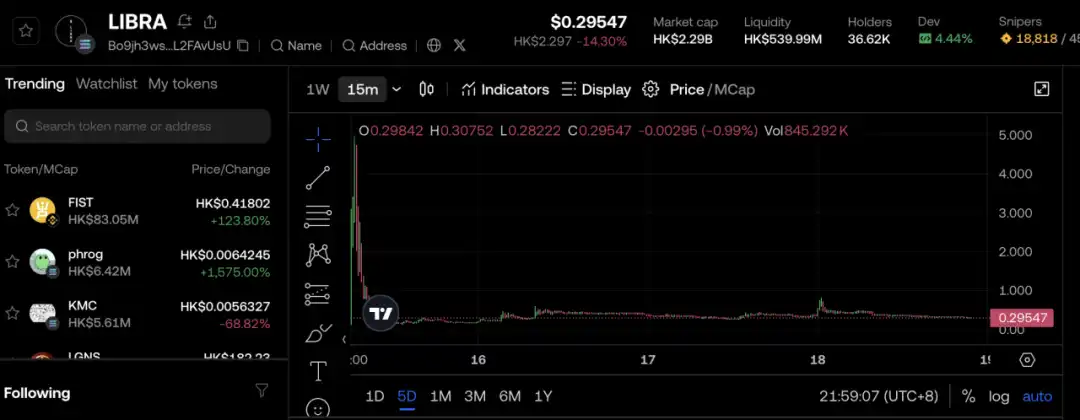
According to the analysis by the on-chain anti-money laundering and tracking tool MistTrack, eight wallets associated with the LIBRA team have currently profited over $100 million, detailed as follows:
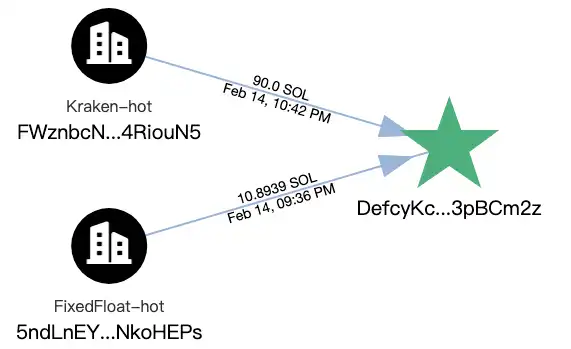
Address 1 - DefcyKc4yAjRsCLZjdxWuSUzVohXtLna9g22y3pBCm2z
On 2025-02-14 21:36:54 (UTC), this address withdrew 10.89 SOL from FixedFloat as initial capital and had previously withdrawn SOL from Kraken:
2025-02-14 21:37:49 to 2025-02-14 21:38:02 (UTC), create a new SPL Token, named LIBRA (Bo9jh3wsmcC2AjakLWzNmKJ3SgtZmXEcSaW7L2FAvUsU), then Mint 1 Billion SPL Tokens:

2025-02-14 21:38:48 (UTC), in the same transaction, transfer 200 million LIBRA to the address Gj9esbWVNJyy55SDJzYudMAznewqmW3Xb6GpUakcCNwT, with no further movement; transfer 500 million LIBRA to the address FdWhTThthSN7mbcmBgh18dzogi1dXqQqBb6BnnzZEJJn, ultimately ending up at address 42rex5yRsP1mdAKHzB5avDzagT6mqB5uYPergUFZ2Tgn.

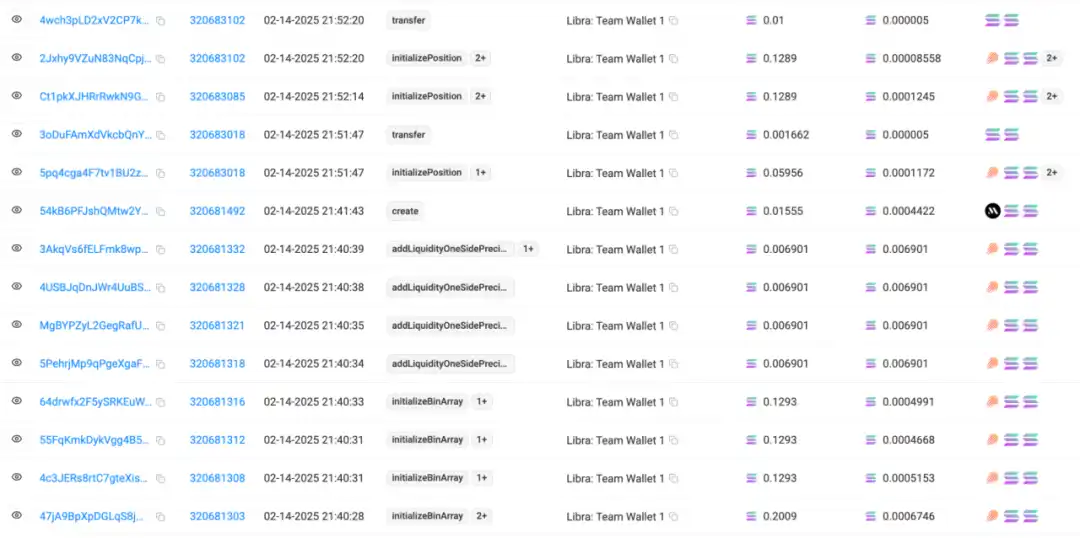
2025-02-14 21:40:24 to 2025-02-14 21:52:20 (UTC), create DLMM Config and Token Metadata:
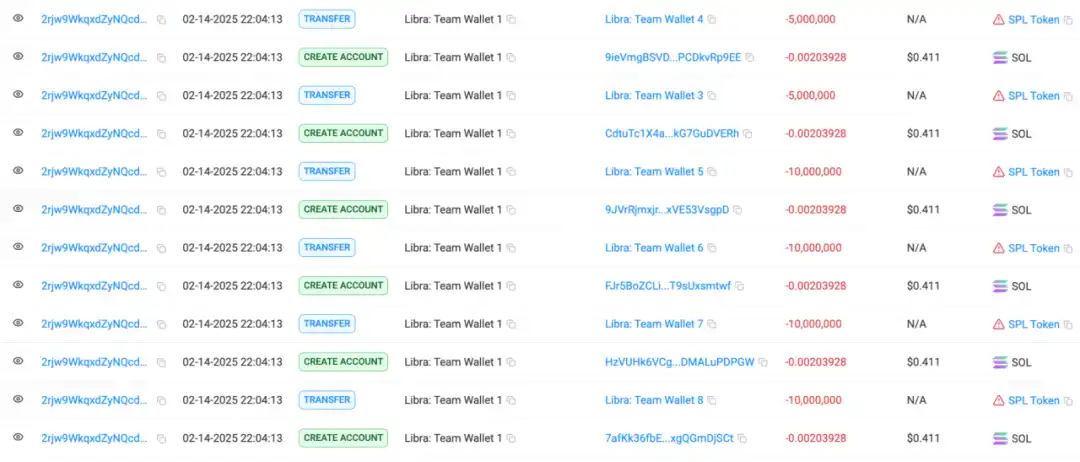
22:01, publish a tweet. 22:04, create relevant accounts and transfer LIBRA:
Profit address 1 profits approximately 13.06 million USDC via claimFee, not yet withdrawn:
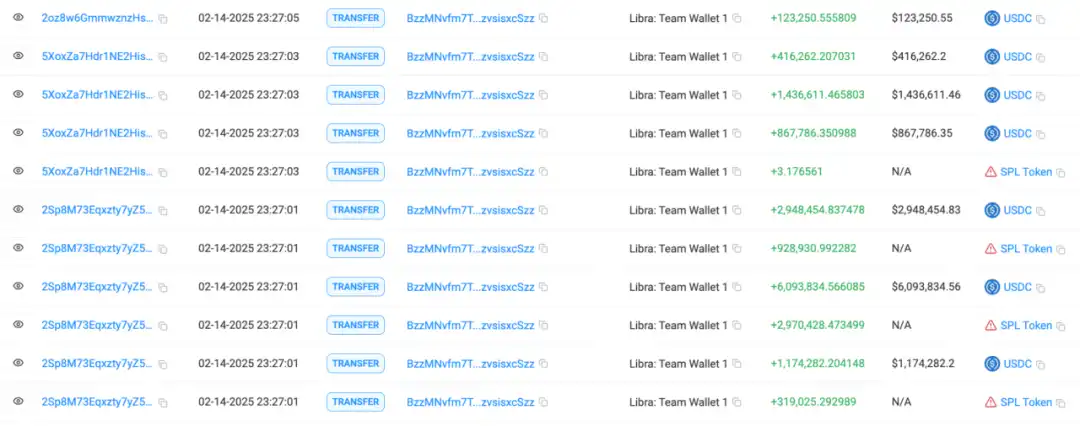
In addition, profit address 1 also transferred 650,000 LIBRA to address 3apupKwTisjy4Wx1zVndXVegmxtR9majPEgHatBRZ1LF at 22:30:34, the beneficial owner of this address is currently unknown.
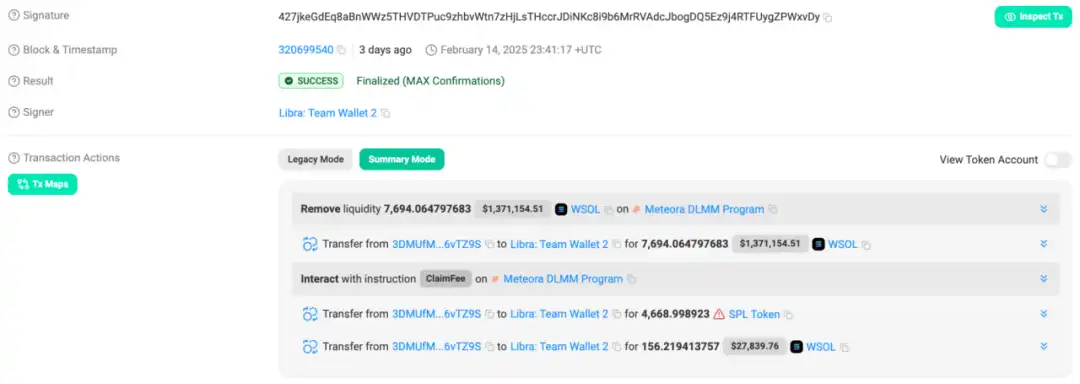
Address 2 - 2QmyirshoyT2ApsQU8bXdeGa2vTsNp1rxEzv4qhzTwyh
Profit approximately 32,052 SOL in address 2, not yet withdrawn, valued at approximately 6.4 million USD:
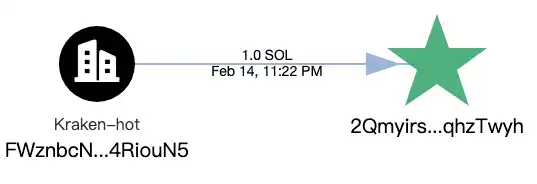
The address previously withdrew SOL from Kraken:
Address 3 - BXoCWWijZiVQFXNRqcZAiHQroYkaUnjkRznnZrt9gj42
Profited approximately 148,343 SOL, worth around $28.84 million:
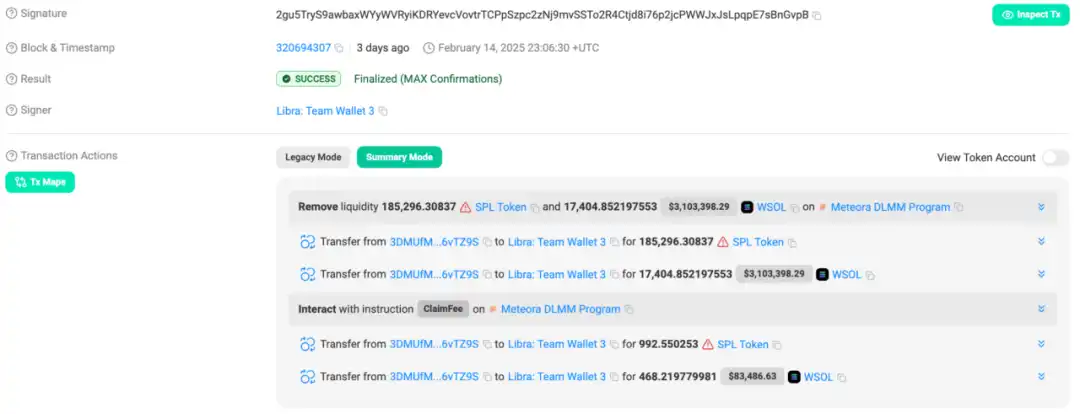
The address transferred 148,343 SOL to address B9KTwxhc9e6qrjw5nfmhgcN38oKFTBtnef8AwaTPVQ6q, which has not been withdrawn yet.
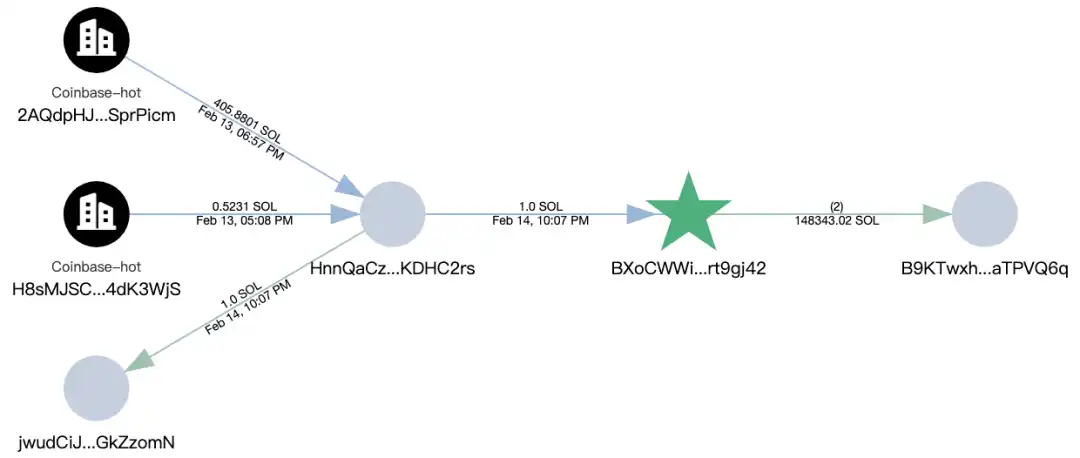
Furthermore, the initial funds of this address came from 1 SOL transferred from address HnnQaCzoFBSkT1xgksM6biyAZSyZgiorYsE6ZKDHC2rs, and address HnnQ also transferred 1 SOL to profit address 4, with address HnnQ's initial funds coming from Coinbase.
Address 4 - jwudCiJ5QUUmfxPXN41jaqYKnSc3UmKo5RoRGkZzomN
Profited approximately 69,276 SOL, worth around $13.47 million:

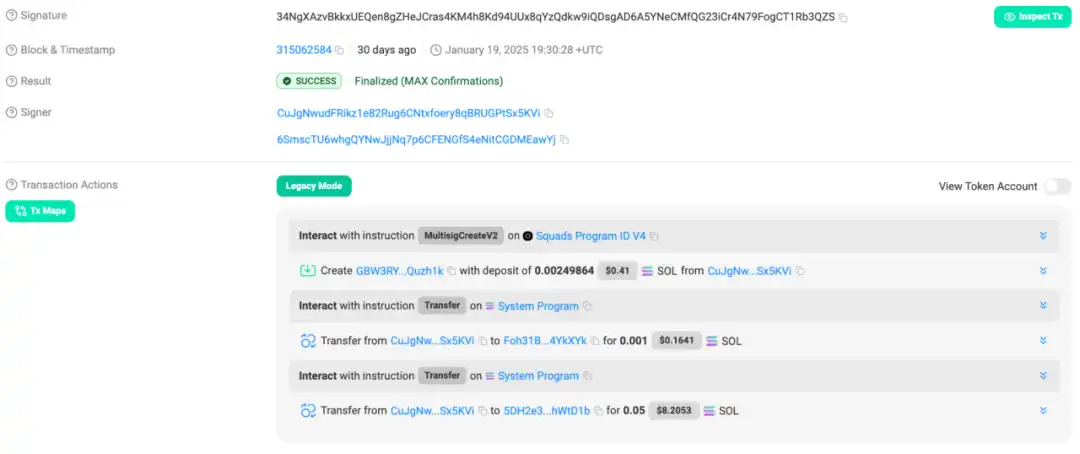
The address transferred 69,276 SOL to address FTjLYkNARZHnqekpKj5mHzbJx7EqW1fSr15Ec4oijBUQ, which has not been withdrawn yet. The initial funds of address FTjL came from 0.14 SOL transferred from address CuJgNwudFRikz1e82Rug6CNtxfoery8qBRUGPtSx5KVi.

It is worth noting that the initial funds of address CuJgNwudFRikz1e82Rug6CNtxfoery8qBRUGPtSx5KVi came from Bybit, and this address provided funding for the deployment of Melania, a Memecoin launched by Melania Trump, the former First Lady of the United States.
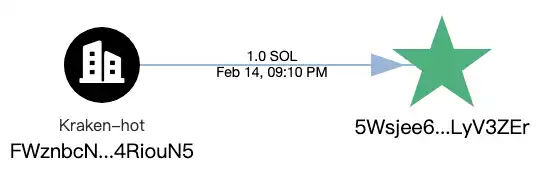
Address 5 - 5Wsjee6FgZQtxjUBedfNq9ZbV6RN7wgb4N422LyV3ZEr
Profit of approximately 1.85 million USDC:
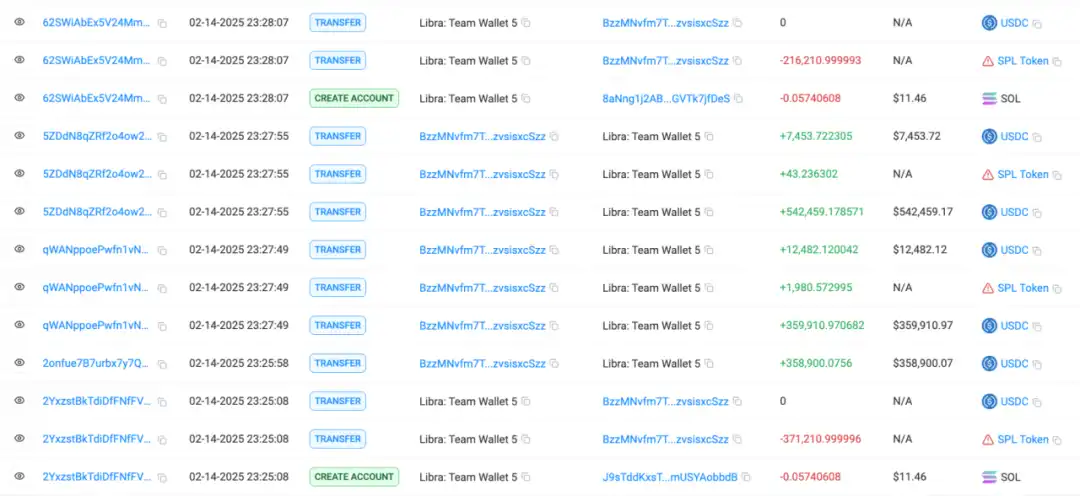
The address previously withdrew SOL from Kraken:
After multiple transfers, the USDC ultimately remained in address 61yKS9bjxWdqNgAHt439DfoNfwK3uKPAJGWAsFkC5M4C. Furthermore, we found that other sources of USDC in address 61yK were transferred from profit addresses 6, 7, 8, with a current total balance of 44.59 million USDC.
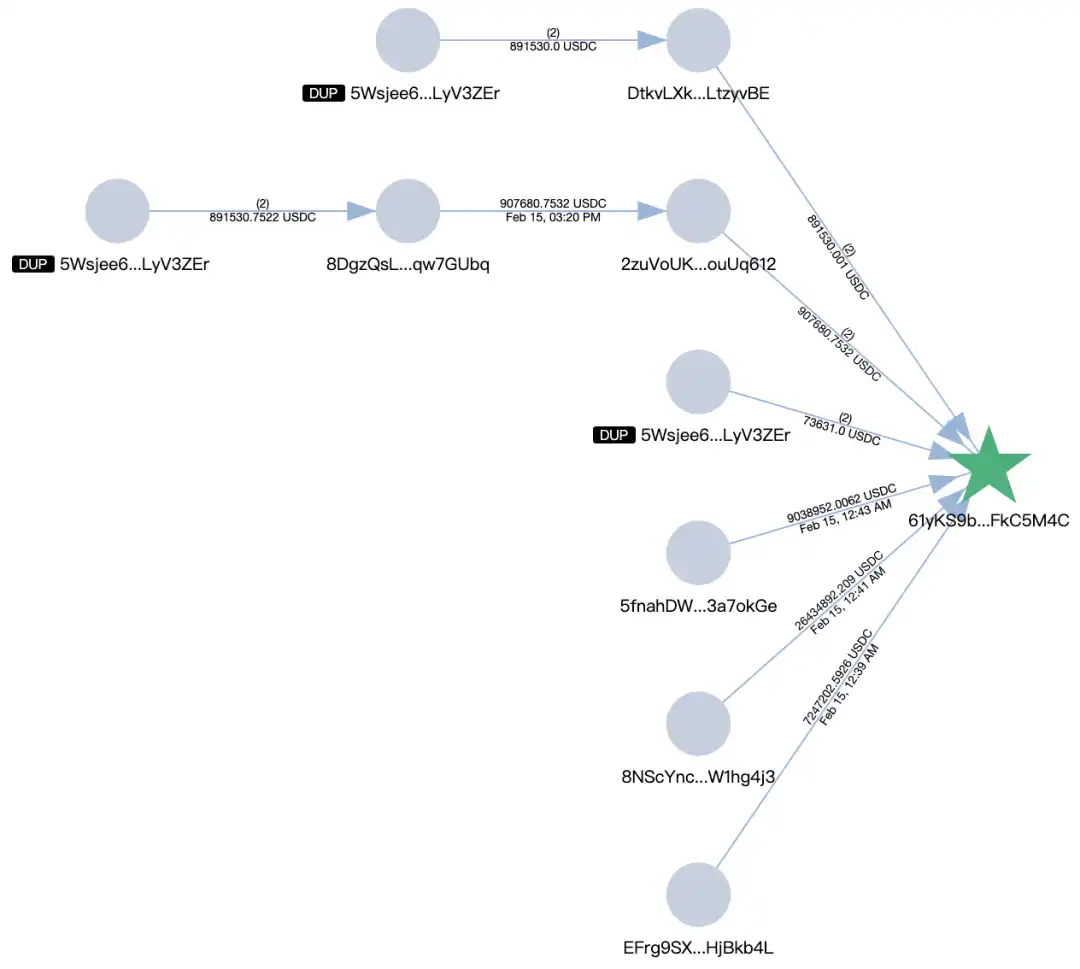
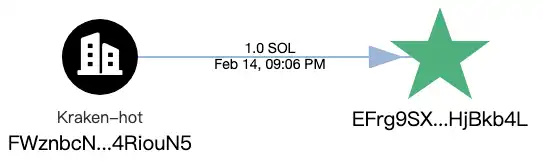
Address 6 - EFrg9SXbnCfuVqJPJf2hKKY3CtTPLHvipEpgrHjBkb4L
Profit of approximately 7.25 million USDC, transferred to address 61yKS9bjxWdqNgAHt439DfoNfwK3uKPAJGWAsFkC5M4C, and address 6's SOL came from Kraken:
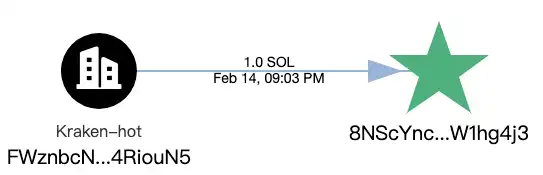
Address 7 - 8NScYncjpY1mKrbxVJFFdVqNPEocyXTnQqy9GW1hg4j3
Profit of approximately 26.43 million USDC, transferred to address 61yKS9bjxWdqNgAHt439DfoNfwK3uKPAJGWAsFkC5M4C, and address 7's SOL came from Kraken:
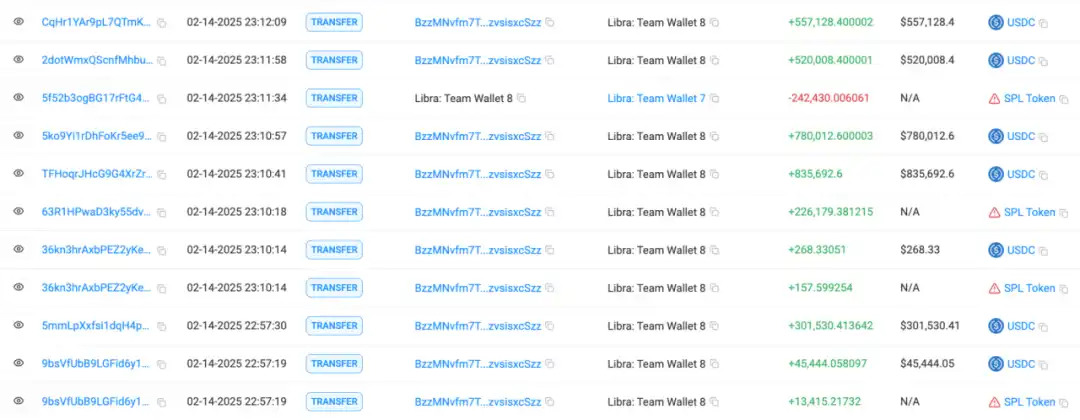
Address 8 - 5fnahDWBtUB8QBTXWHm2QzfAoAVHToxvMf38i3a7okGe
Profit of approximately 9 million USDC, transferred to address 61yKS9bjxWdqNgAHt439DfoNfwK3uKPAJGWAsFkC5M4C, and address 8's SOL came from Kraken:
As a newly launched project, LIBRA has not undergone a market audit, lacks a public technical whitepaper or compliance safeguards, and lacks value support. It is worth noting that some media outlets have pointed out controversial remarks in Milei's social media history, suggesting this behavior may be due to a hacked account. Furthermore, there have been allegations from users claiming that crypto influencer Threadguy admitted in a previous live stream that he was aware of LIBRA's token issuance information weeks in advance, potentially indicating another insider trading incident. This raises further questions about the legitimacy and security of this "token issuance operation." In addition, there have been rumors that a close associate of Milei accepted a $5 million bribe to push this token project in front of the president, facilitating the president's promotion of LIBRA. All these revelations further expose the possible manipulation and lack of transparency behind politicians launching tokens, highlighting the core issue of inadequate regulation behind the project.
The Risks Behind the Celebrity Effect
Milei is not the first politician to dabble in cryptocurrency. In January 2025, Trump also launched a Memecoin called TRUMP, which, solely based on his personal brand effect, successfully sparked a market frenzy. On the day of its launch, $TRUMP's market value skyrocketed by 1250%, with a trading volume exceeding 5 billion dollars.
Users' FOMO sentiment towards $TRUMP also led to new scams. An X account named @TrumpDailyPosts with over 1.6 million followers not only synchronizes Trump's posts on Truth Social to Twitter but also posts Trump-related news and other tweets. According to an analysis by the SlowMist Security Team, this account had posted at least 4 tweets about the Memecoin, all of which were deleted minutes after posting, and only the mentioned account was allowed to comment.
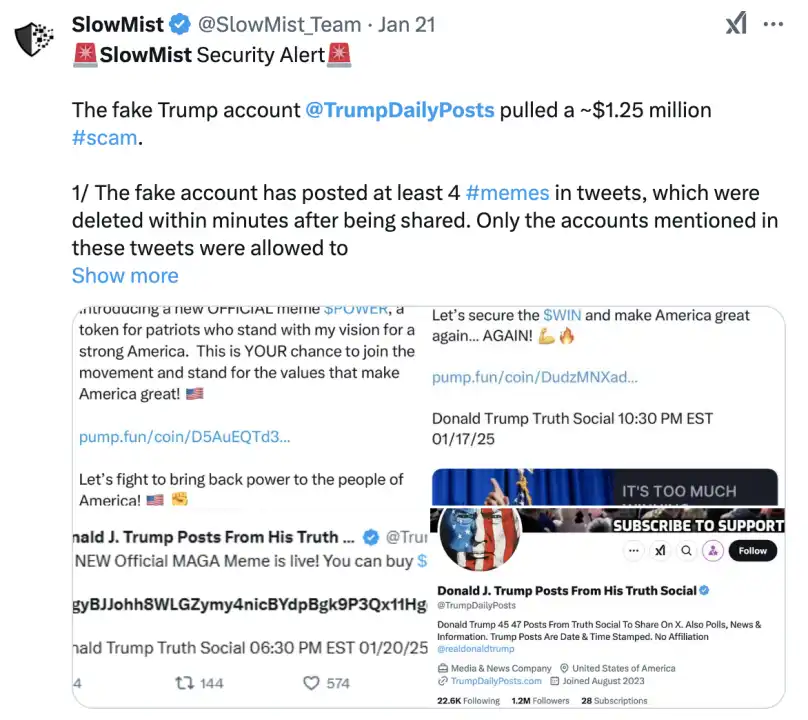
The Trump family's actions are not the first to cause controversy. As mentioned earlier, the token MELANIA launched by Trump's wife Melania led to a halving of the TRUMP price, causing MELANIA's market value to evaporate by 7.5 billion dollars in just 10 minutes, resulting in significant wealth losses for users. Although Trump and his family claim that these actions are "in support of cryptocurrency innovation," these tokens often lack underlying value support, relying on the core of celebrity effect hype, with the market lacking a true assessment of the project's value. Once the market hype fades, the token's value will rapidly collapse, causing significant losses to ordinary investors, appearing glamorous on the surface but hiding substantial risks.
Politicized cryptocurrency does not equate to economic innovation and is often merely a tool for shifting contradictions and attracting attention.
In February 2025, the President of the Central African Republic, Faustin-Archange Touadéra, launched a Memecoin called CAR, claiming that this move would drive national development through crypto assets. However, an investigation by the SlowMist Security Team found that CAR's official website was only registered for 4 days, with 80% of the tokens concentrated in 6 associated addresses, funded by Binance, lacking security audits and technical support.

That same month, the social media account @chedetofficial of Malaysia's former Prime Minister also tweeted an announcement of the launch of $MALAYSIA, with the account suspected to have been hacked.
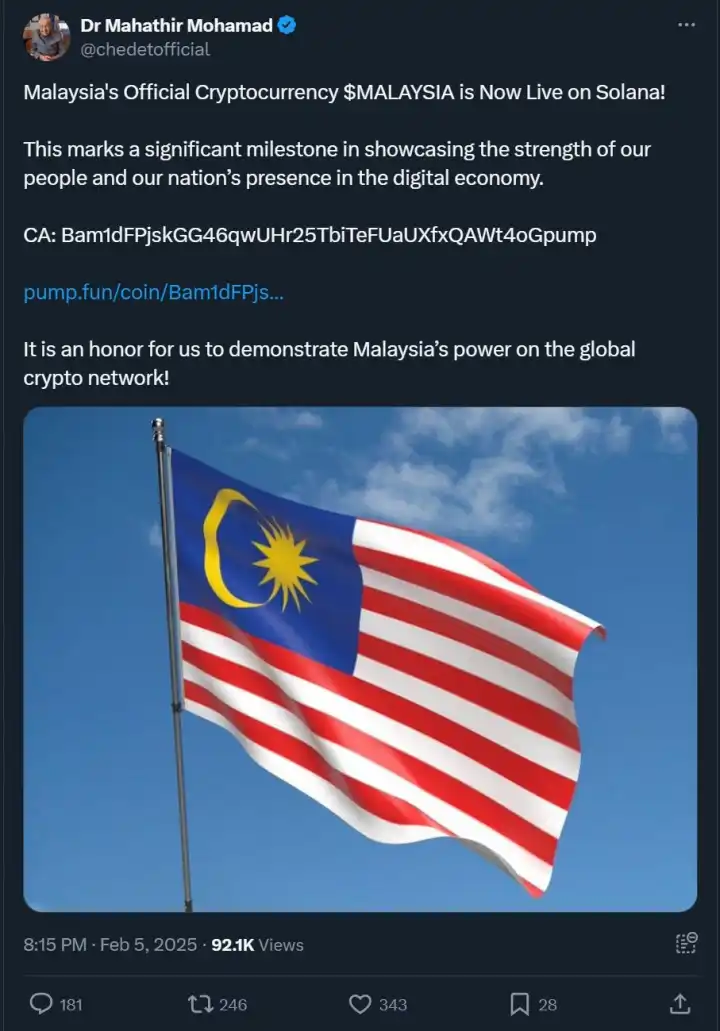
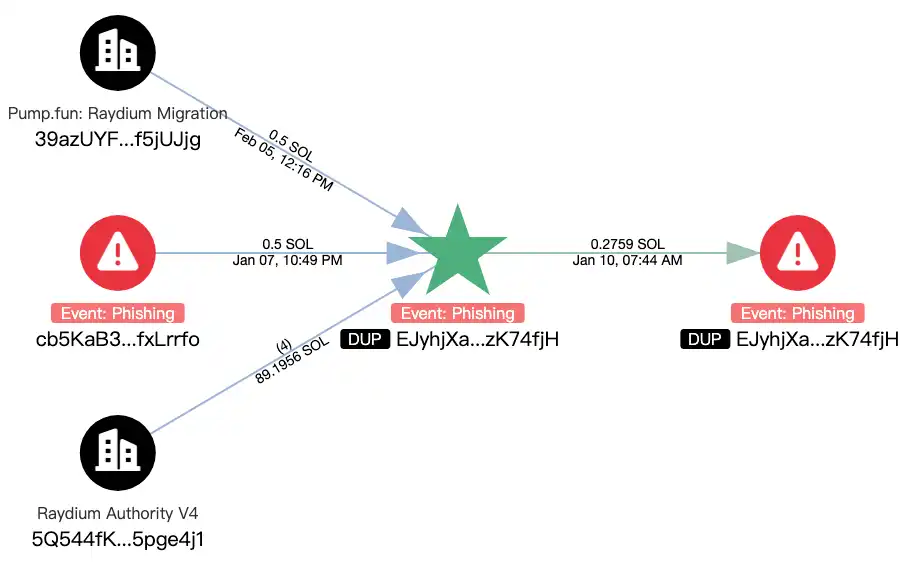
We identified through MistTrack that the creator of the smart contract address (CA) associated with this account has been linked to a historical malicious group.
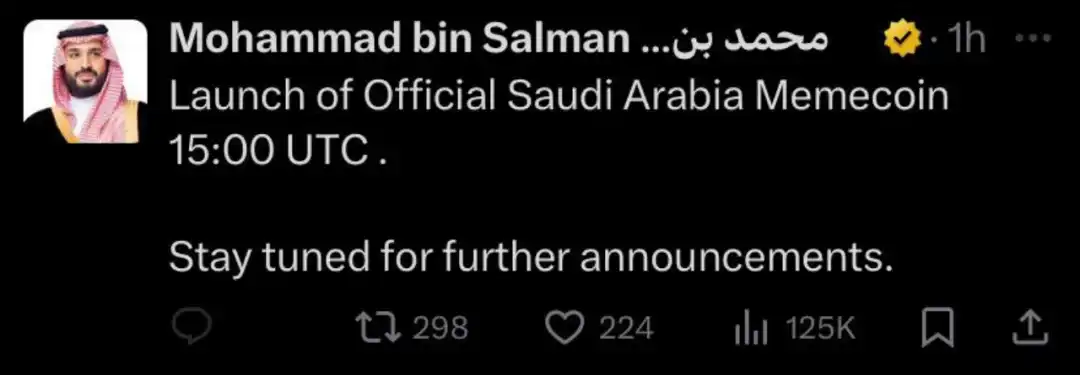
Fast forward to February 17, a fake X account claiming to be a Saudi Crown Prince official has been continuously posting tweets about Memecoin:
In addition to the above "coin launch" event, some politicians have also attempted to boost fiscal revenue through cryptocurrency mining farms, with Iran being one of them. The Iranian government had announced the legalization of domestic cryptocurrency mining farms to bring in more foreign exchange for the country. However, this move not only failed to effectively relieve Iran's economic pressure but also resulted in massive resource wastage and illegal power consumption due to a lack of proper regulation and policy safeguards, further diminishing the government's credibility in the international community.
Such tokens often experience an initial price surge through hype and fund manipulation, but when the market bubble bursts, investors are often left bearing the brunt of the losses. We have witnessed investors get liquidated within a very short period, suffering significant losses. This vicious cycle not only tarnishes the market image of cryptocurrency but also poses a significant threat to the wealth of ordinary investors.
Beware of Politicized Cryptocurrency Scams
The innovation of cryptocurrency should be built on a transparent and fair regulatory framework, rather than becoming a tool for politicians to exploit their personal influence and capital for hype. While the celebrity effect may attract a large number of investors in the short term, this hype often lacks underlying value, and these projects are usually unaudited, unregulated, and lacking reliable technical support. In such cases, investors blindly follow the trend, and once market sentiment reverses, token prices quickly collapse, leaving ordinary investors as the biggest victims.
We advise users to remain vigilant when dealing with such projects. It is essential to critically assess their authenticity and security from multiple perspectives, avoid blindly following trends, and preferably choose platforms that have undergone rigorous audits and compliance. To better protect their assets, users can utilize professional on-chain tracking tools such as MistTrack (https://misttrack.io/) to monitor and analyze their funds. MistTrack can assist users in real-time transaction tracking, fund flow analysis, thereby reducing the risk of encountering scams or Rug Pull events, and better safeguarding asset security.
You may also like

Meet the new WEEX trial fund—your gateway to greater profits

WEEX Labs Lands at Dutch Blockchain Week: A Disruptive Crypto × AI Conversation Sets Sail in Amsterdam

SK Hynix Reportedly Plans U.S. ADR Listing as Early as August, With SEC Approval Possible in Late June
SK Hynix may pursue a U.S. ADR listing as early as August, with SEC approval reportedly possible in late June amid strong AI chip supply chain demand.

SpaceX vs Tesla vs xAI: Which Elon Musk Trade Has the Biggest Upside in 2026?

OpenAI Reveals It Has Confidentially Submitted an S-1 to the SEC, Keeping the Door Open for a Future IPO
On June 9, according to an OpenAI announcement, the company recently confidentially submitted a draft S-1 registration statement to the U.S. Securities and Exchange Commission (SEC), beginning the preliminary compliance process for a potential initial public offering. OpenAI said it chose to disclose this proactively because it expected the news might leak; however, the company has not yet set a specific listing timeline, and related arrangements may still take some time.

Latest research from 13 top universities including Cornell University: The current state, challenges, and misconceptions of the fusion of Crypto and AI
Deconstructing Anthropic: The Best AI Company, Possibly Also a Type of Organizational Invention
Apollo and Blackstone Reportedly Back $35 Billion Anthropic Chip Financing as Deal Details Remain Unclear
On June 9, according to currently available news alerts, Apollo and Blackstone Group participated in a $35 billion financing for an Anthropic “chip project.” Based on the original wording of the report, the funding has already been raised, but public information remains limited. The financing structure, use of proceeds, project entity, and whether Apollo and Blackstone participated through equity, debt, or project financing have not yet been disclosed.

Humanity Protocol Security Incident Escalates: More Than $31 Million Stolen From Related Addresses as Attacker Continues Selling H for ETH
On June 9, according to monitoring by Onchain Lens, more than $31 million has been stolen from addresses linked to Humanity Protocol, and the attack is still ongoing, with the hacker continuously swapping H tokens for ETH. Project founder Terence Kwok later confirmed the security incident on X, saying the issue involved a private key leak.

Bloomberg: As Bitcoin Weakens, Stablecoins and RWA Continue to Drive Expansion in Crypto Businesses
In June, Bloomberg reported that despite Bitcoin falling below $60,000 last week, wiping out about $235 billion in market value within seven days, and dropping close to 50% from last year’s peak, some core businesses in the crypto industry are still expanding, mainly in stablecoins, real-world asset tokenization (RWA), payments, and infrastructure. The report also noted that overall altcoin activity has contracted significantly: altcoin market capitalization has fallen from a peak of about $431 billion in November 2021 to around $170 billion, and among the tens of millions of tokens issued in recent years, fewer than 1,700 still maintain meaningful trading activity.

Galaxy Deep Research Report: How Hyperliquid's HIP-4 Upgrade Changes the Landscape of Prediction Markets?
Binance Research: RWA Market Expected to Expand Nearly 6x from Early 2025, with Public Equities and Onchain Payments Heating Up Together
In June, Binance Research said in its monthly market report that the real-world asset (RWA) market is expected to grow by about 589% from the beginning of 2025. Bond- and money market fund-related RWA expanded by about $6.5 billion, up 83% year over year, while publicly traded equity RWAs grew by about 422%. The report also noted that monthly crypto debit card transaction volume exceeded $747 million in May, up 48.6% year to date.

Japan to Assess a Framework for Yen Stablecoins and Crypto ETFs as Asia’s Compliant Payments Narrative Heats Up
Recently, according to the original report, Japan is considering the launch of yen stablecoins and cryptocurrency ETFs. Public information remains limited at this stage, and there is still no complete policy text, regulatory draft, or clear implementation timeline, so this is better characterized as a “policy discussion” rather than formal implementation. The original wording also noted that advancing stablecoin regulation in Asia is driving XRP usage and supporting growth in the XRPL ecosystem. However, based on currently available public information, there is not enough evidence to directly establish a clear causal relationship between this round of discussion in Japan and XRP or XRPL.

ZachXBT: Humanity private key leak and abnormal surge in H token should be viewed separately
On June 9, according to related disclosures, on-chain investigator ZachXBT posted an update on Humanity’s roughly $31 million security incident, saying that after further analyzing fund flows, he currently tends to believe the project team was not involved in an “inside job” or a self-staged attack. According to him, the official explanation about the private key leak was broadly accurate, but before the token unlock, the price of H had been artificially pushed higher, and the hacker later took advantage of that market environment; therefore, the private key leak and the earlier abnormal price pumping should be regarded as two separate and independent events. This reframing has shifted the market’s understanding of the nature of the incident. Earlier discussion around Humanity had focused on whether the team directly participated in the attack or used the security incident to cover up internal operations. ZachXBT’s latest remarks shift the focus from “whether it was self-theft” to “whether there were pre-unlock market structure issues.” He also questioned whether the team may have.

Morning Report | OpenAI has submitted an S-1 registration statement draft to the U.S. SEC; Morpho completes $175 million financing

Morning Report | BitMine increased its holdings by 126,971 ETH last week; trader Eugene announced his exit from the crypto market

Wang Chuan: How can one not feel anxious after the neighbor Old Wang made thirty times profit by investing in storage stocks? (Seven) - A quarter-century cycle
Cryptocurrency CEXs are flocking to sell US stocks, and traditional brokerages are facing an "uninvited guest."
Meet the new WEEX trial fund—your gateway to greater profits
WEEX Labs Lands at Dutch Blockchain Week: A Disruptive Crypto × AI Conversation Sets Sail in Amsterdam
SK Hynix Reportedly Plans U.S. ADR Listing as Early as August, With SEC Approval Possible in Late June
SK Hynix may pursue a U.S. ADR listing as early as August, with SEC approval reportedly possible in late June amid strong AI chip supply chain demand.
SpaceX vs Tesla vs xAI: Which Elon Musk Trade Has the Biggest Upside in 2026?
OpenAI Reveals It Has Confidentially Submitted an S-1 to the SEC, Keeping the Door Open for a Future IPO
On June 9, according to an OpenAI announcement, the company recently confidentially submitted a draft S-1 registration statement to the U.S. Securities and Exchange Commission (SEC), beginning the preliminary compliance process for a potential initial public offering. OpenAI said it chose to disclose this proactively because it expected the news might leak; however, the company has not yet set a specific listing timeline, and related arrangements may still take some time.
Latest research from 13 top universities including Cornell University: The current state, challenges, and misconceptions of the fusion of Crypto and AI


