
2-Hour Express $20M Market Cap, Is time.fun Planning to Host a "Web3 Edition Buffett Lunch"?


Summary: Perhaps the New Traffic Engine of the Solana Ecosystem
Today's plunge has dampened market sentiment, but there is also a bright spot in the midst of the chaos.
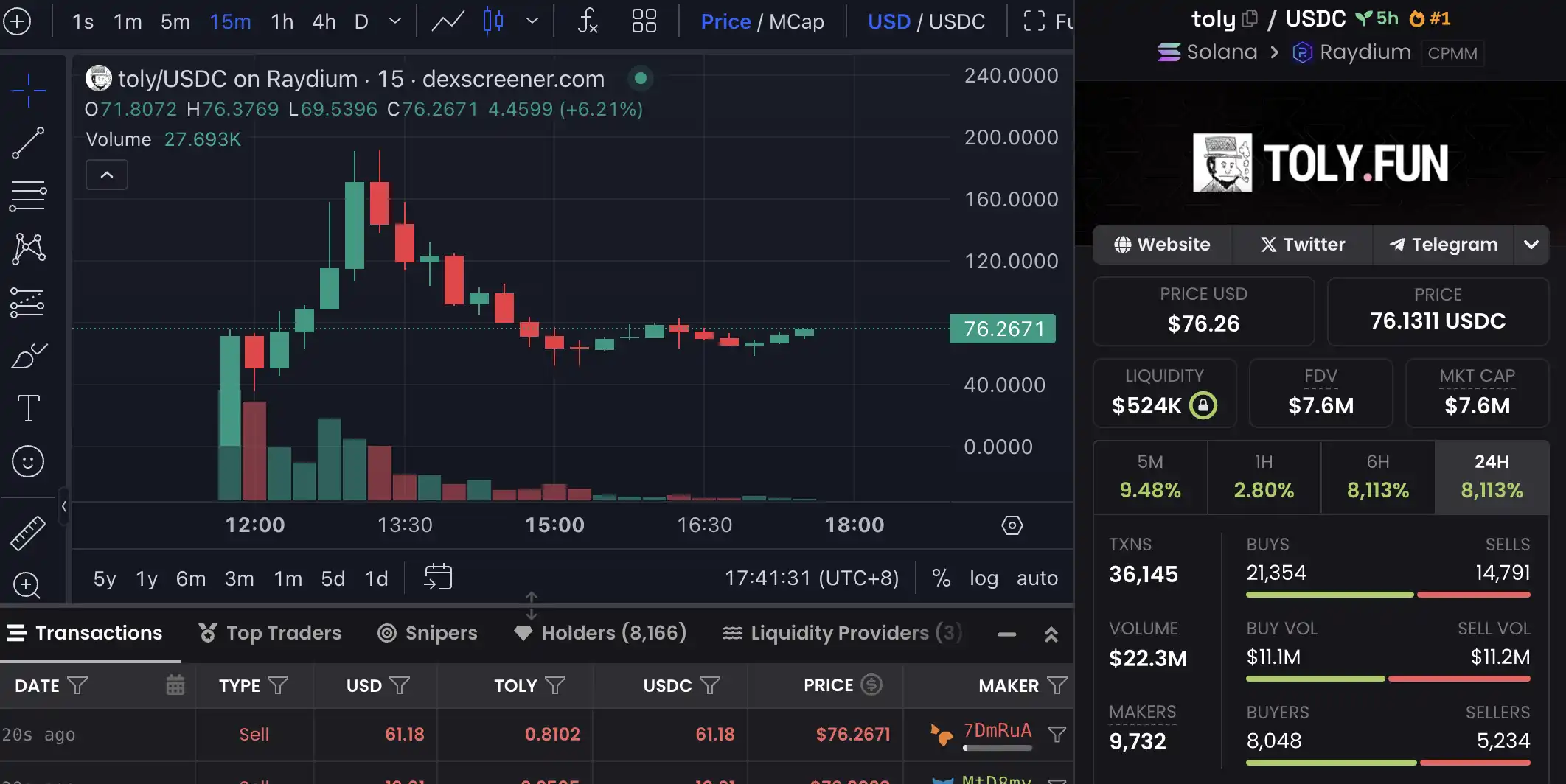
This morning, Solana co-founder toly officially joined the time tokenization SocialFi platform time.fun. On this platform, toly's personal time token, toly's minutes, saw its market value soar to nearly $20 million within just 2 hours, with a peak price of 190 US dollars per token. In response to this, toly posted on social platform X in reference to time.fun's tweet about "toly's minutes," stating: "Business communication is one of my favorite use cases for crypto."
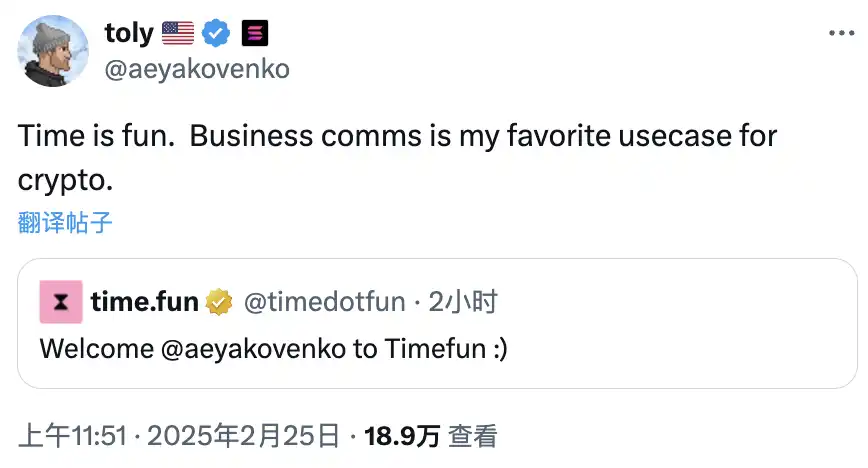
With the launch of time.fun, has Solana, which has experienced both glory and pain, found a new pillar? Let's first take a look at what time.fun is all about.
How to Play time.fun
time.fun is a SocialFi project based on the Solana blockchain, with its core gameplay revolving around "time tokenization." It allows creators to transform time into tradable assets, enabling users to "book" the time of creators for one-on-one interactions by purchasing these tokens.
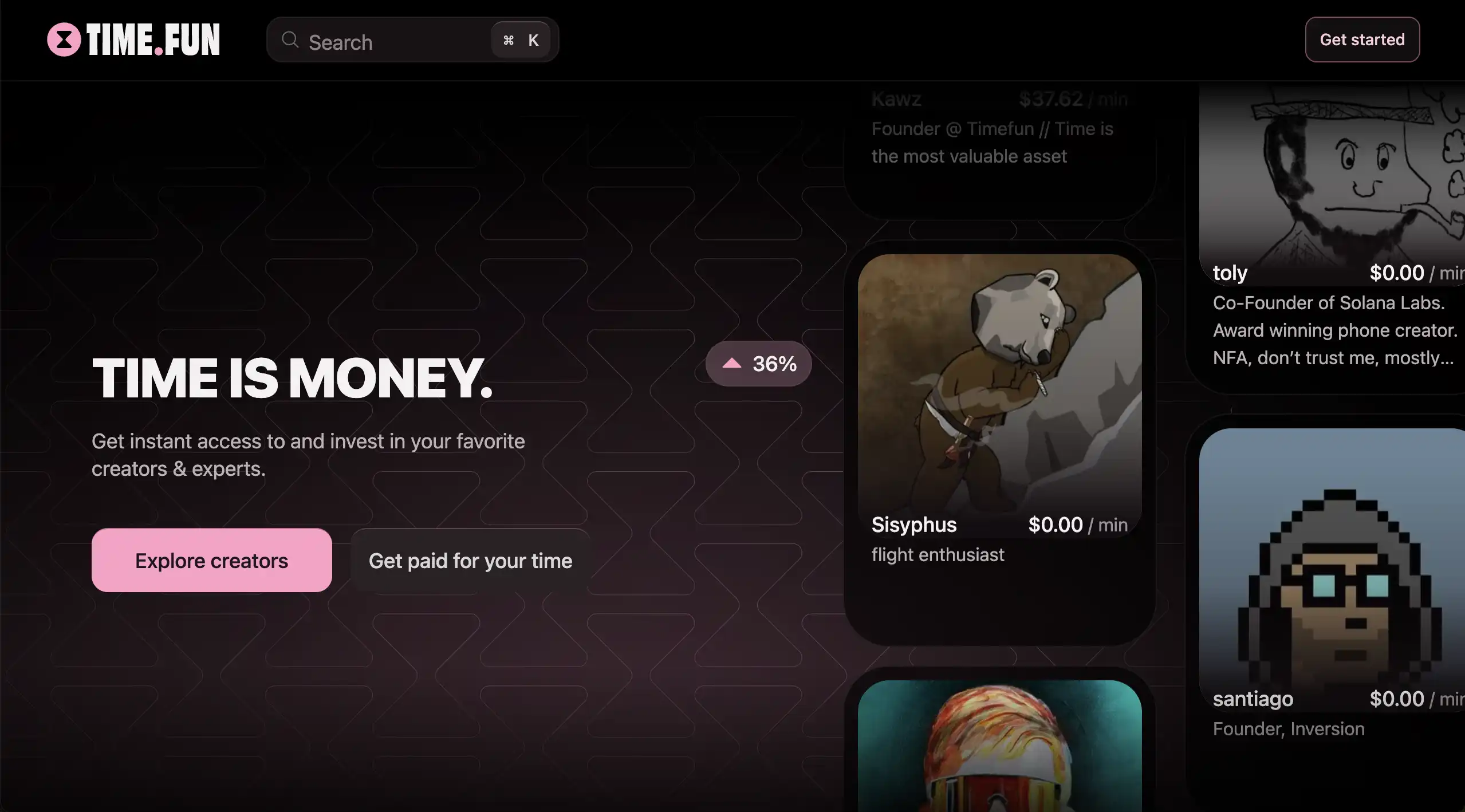
To use time.fun, users first need to register an account and set up an integrated wallet, then make a USDC deposit. After the deposit is completed, users can browse the "time tokens" issued by different users on the platform. Each token represents a certain duration of interaction rights, such as one minute of chat or video call time. After selecting a desired target, users use USDC in their wallet to purchase the corresponding token and then contact the token issuer to arrange the specific form of interaction, such as DMs, voice calls, or video conferences, depending on the issuer's settings. If there is no response within the specified time frame, there is also a refund policy in place.
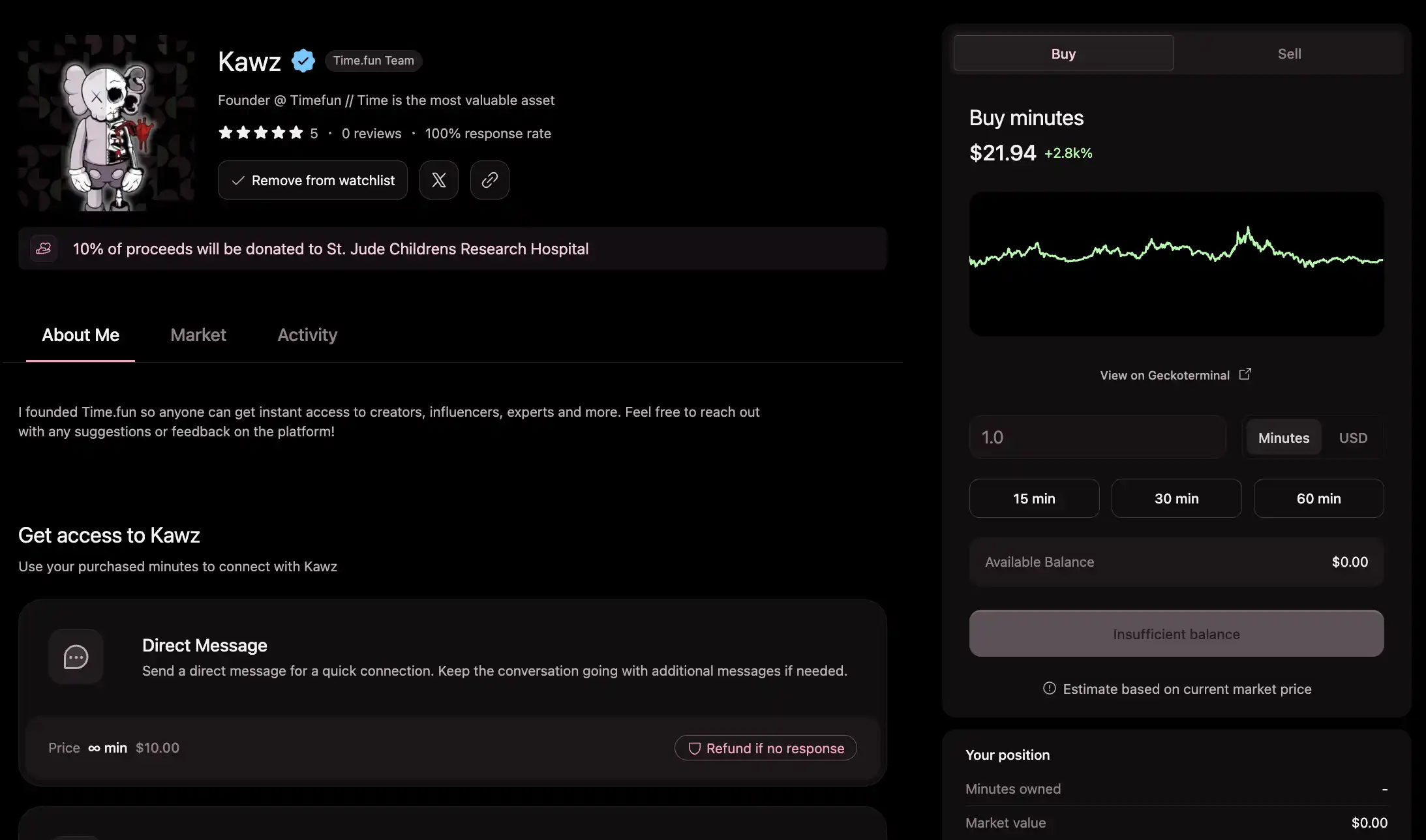
Similar to a Pump, time.fun also has both a primary and secondary market. In addition to direct interaction in the primary market, these tokens can be traded on the secondary market after being pumped out, thus also possessing a certain speculative nature. Each token issuer can receive a total of 100,000 minutes of time, with 1 token per minute, and once used up, it stops, effectively creating a deflationary model.
In addition, time.fun also allows users to choose to donate a certain percentage (10%, 25%, 50%, or 100%) of the profits to nonprofit organizations and charities. The Solana official account specifically stated that currently Solana Foundation members have joined time.fun and will donate all income received through the platform.
Related Reading: "Solana Co-founder's Favorite Application Use Case, How to Use Time.fun?"
In essence, the underlying logic of time.fun is: the most direct way to short or long someone is through the value of their time. For example, Musk's early supporters could buy his time in 1990 and share in his future success proportionally; if you found threadguy early in his content creation career, you could make significant gains on your investment. Additionally, each user who tokenizes time will create a "Time Holder Fund." These are "reward pools," where both time holders and redeemers will be rewarded for supporting creators.
Which celebrities have minted coins on time.fun?
In the bear market scenario, $TOLY quickly caught everyone's attention, especially as the market crashed and Solana was nearly halved from its ATH. At this time, time.fun migrating from the Base chain to Solana also opened up some imagination.
Some netizens mentioned that Toly personally took action to mint coins to demonstrate the foundation's support for time, and Solana's founders wanted to maintain SOL liquidity through time.fun, reinvigorating trading enthusiasm in the SOL ecosystem. Of course, some people are skeptical about time.fun, seeing it as similar to the previous time tokenization project Time Store, except that Time Store did not limit the total supply of minted coins, but in the end, both are celebrity coin projects.
In any case, time.fun has attracted some traffic and some celebrities have already minted coins. The current situation of celebrities who have minted coins on time.fun is as follows:
Anatoly Yakovenko (toly)
Identity: Co-founder of Solana, a highly influential figure in the crypto community.
Token: Toly's minutes. Considered the "number one" token. According to X's post and community discussions, Toly's involvement brought significant attention to the platform.
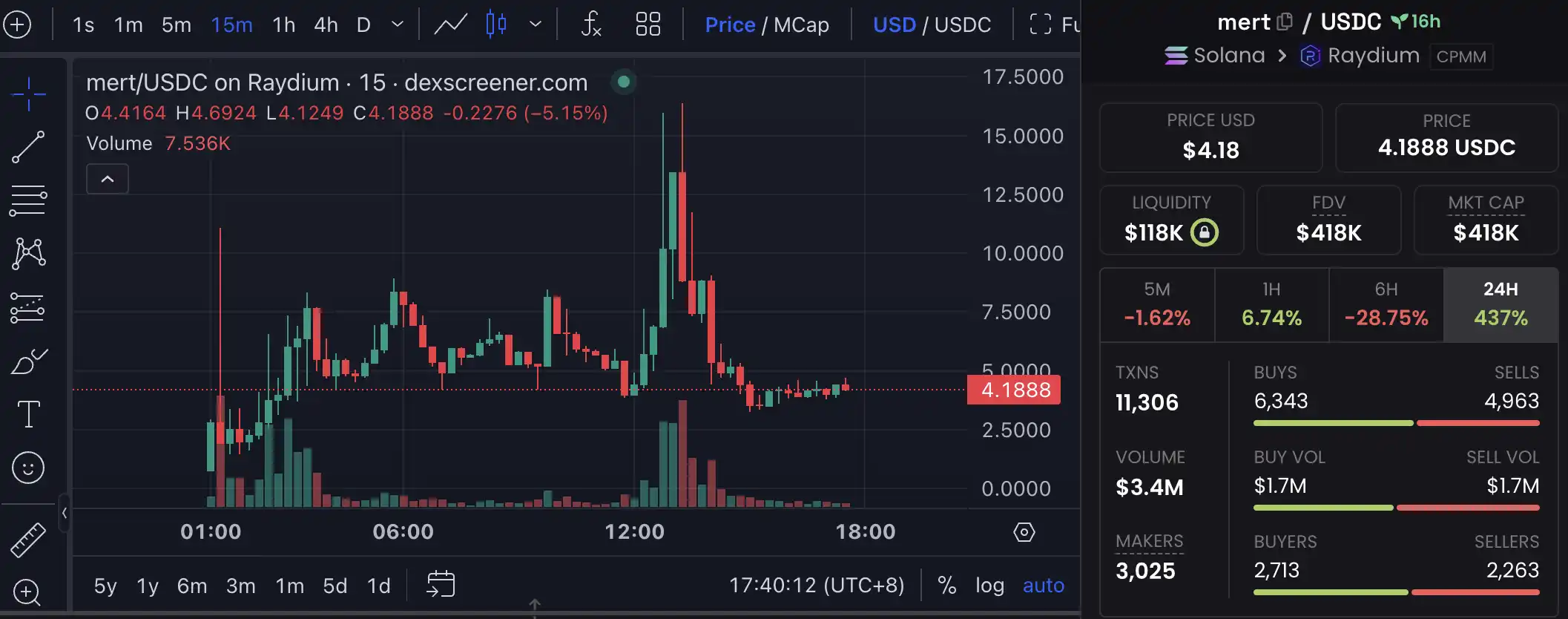
Mert
Role: CEO of Helius Labs, a key player in the Solana ecosystem, who has supported Time.fun's inclusion in its Startup Launchpad.
Token: Mert's minutes. As a prominent figure in the Solana ecosystem, his token may be one of the early test cases.
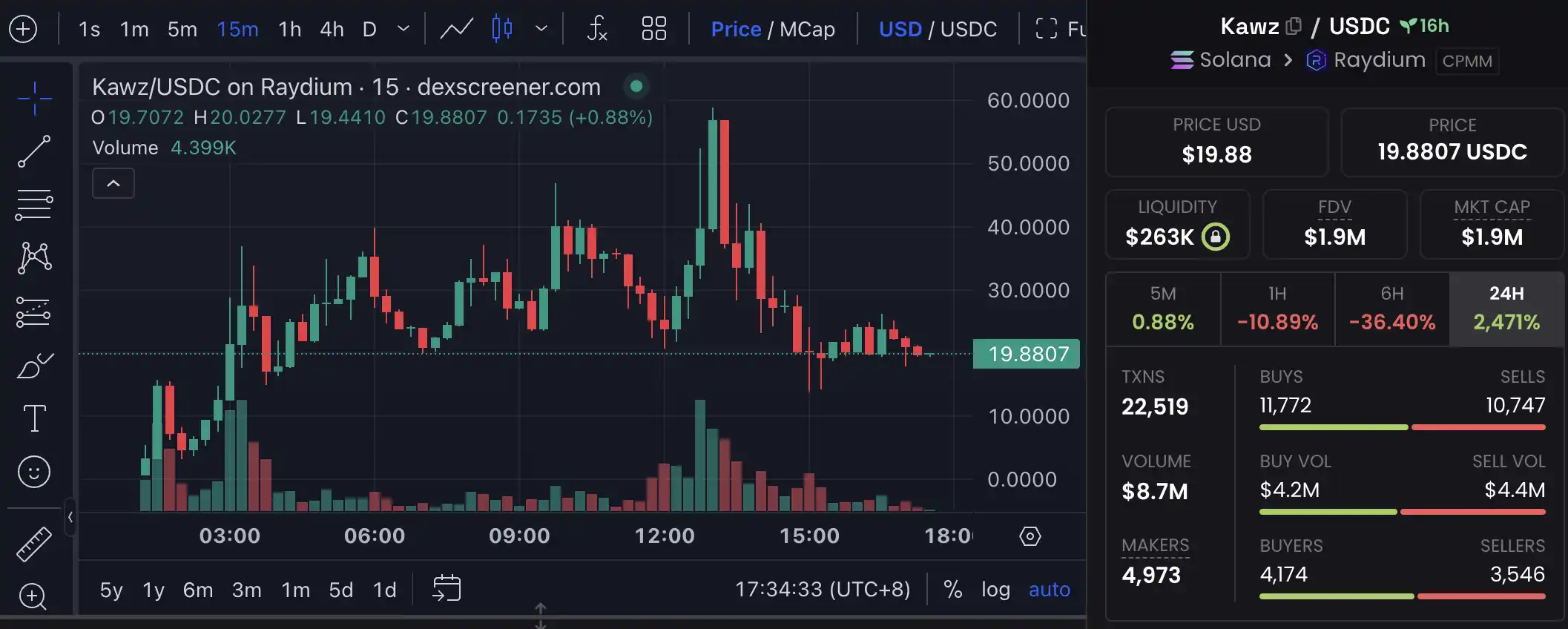
Kawz
Role: Kawz is the project's founder and a well-known figure in the cryptocurrency field.
Token: Kawz's minutes. Issued by the time.fun founder, the higher the platform's visibility, the more likely the token's value will experience significant growth.
Can it Save SocialFi?
The SocialFi sector where time.fun is located once saw a wildly popular project: friend.tech. Deployed on the Base chain, users could interact with influencers by purchasing the "key" token. The project quickly gained fame in 2023 for its innovative model, attracting a large user base and funding. However, after 2024, its popularity gradually waned, community activity plummeted, and it eventually shut down in September of the same year. The main reason behind this was that friend.tech's model relied too heavily on short-term hype and lacked sustained content ecosystem support.
Related Reading: "From Paradigm Investment to Soft Rug, Recording a Turbulent Year of Friend.Tech | Web3 Autopsy Report"
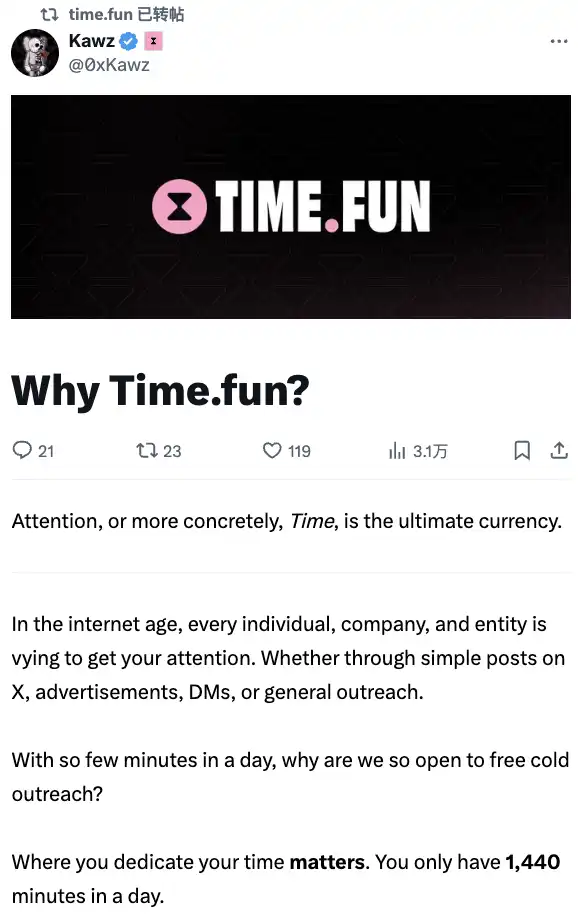
Regarding the former leading project in the field, time.fun founder Kawz posted on social media, stating, "Friendtech is the first social platform that I believe crypto infrastructure is ready for. Low-cost L2, embedded wallet, and convenient fiat on/off ramps." Building on this, time.fun chooses to price creators' access using time, or rather, time.fun chooses to use time as the ultimate currency in this attention economy market.
For top celebrities who have taken the lead in various industries, their knowledge, resources, and influence can be said to be outstanding in the industry. The tokenization of time on time.fun not only transforms celebrities' time into tradable digital assets but also creates an opportunity for users to directly access experts with money. However, launching in the current bear market, can time.fun leverage the celebrity effect to drive initial traffic and attract users while building a sustainable ecosystem? Can it avoid becoming a tool for speculation and hype? And can it ignite new vitality in the SocialFi track? All of this remains to be seen.
You may also like

Mastercard Launches Agent Pay for AI, Plans to Record AI Agent Payment Authorizations on Polygon
Mastercard launched Agent Pay for AI, a new payment protocol designed to help AI agents make small payments such as pay-per-use access to data and APIs. The system plans to record human-granted AI agent permissions on Polygon, focusing on verifiable authorization, identity, and payment controls.

Curve Deploys Llamalend v2 on Optimism With 250,000 OP Incentives
Curve launched Llamalend v2 on Optimism with 250,000 OP incentives from the Optimism Foundation. The upgrade expands Llamalend beyond its earlier crvUSD-focused model, adding broader collateral support, LlamaRisk market reviews, and the ability to use Curve LP tokens as collateral.

Raydium Old Liquidity Pool Reportedly Exploited, With $1.34 Million Moved to Ethereum and Tornado Cash
An old Raydium liquidity pool was reportedly exploited for around $1.34 million in USDC, RAY, and wSOL, with the stolen funds bridged to Ethereum and deposited into Tornado Cash. The incident highlights the tail risks of legacy DeFi pools, old contracts, and cross-chain fund laundering paths.

Kalshi Executive Challenges “SBF Backed AI Unicorns” Narrative, Says Leopold Aschenbrenner Was Key Figure
Kalshi executive John Wang questioned the “SBF backed AI unicorns” narrative, saying Leopold Aschenbrenner was the key figure behind major AI investment decisions.

Pantera Capital Partner: How Tokenization is Restructuring the Private Equity and Early Investment Ecosystem?

New York Proposes Stricter Stablecoin Issuer Rules Aligned With Federal GENIUS Act
NYDFS proposed stricter stablecoin issuer rules aligned with the GENIUS Act, covering reserves, custody, redemption timelines, audits, and capital buffers.
Every exchange is a "Universal Exchange."

The counterattack of traditional finance: Alliance chains are quietly reviving

CryptoQuant Says Bitcoin Profitable Supply Is Near 45% Pressure Zone as On-Chain Data Points to Market Repricing
CryptoQuant said Bitcoin’s profitable supply is nearing the 45% pressure zone, signaling rising market stress, unrealized losses, and a possible on-chain repricing phase.

Bitcoin Falls Below 200-Week Moving Average as On-Chain Data Shows Over Half of Supply in Loss
Bitcoin dropped below its 200-week moving average as on-chain data showed over 50% of circulating supply is now in loss, signaling rising market stress.

CFTC Reportedly Plans New Prediction Market Rules Focused on Manipulation Risk and Public Interest Review
The CFTC is reportedly preparing new prediction market rules focused on manipulation risk, public interest review, and retail trader protections.

Meet the new WEEX trial fund—your gateway to greater profits

WEEX Labs Lands at Dutch Blockchain Week: A Disruptive Crypto × AI Conversation Sets Sail in Amsterdam
SK Hynix Reportedly Plans U.S. ADR Listing as Early as August, With SEC Approval Possible in Late June
SK Hynix may pursue a U.S. ADR listing as early as August, with SEC approval reportedly possible in late June amid strong AI chip supply chain demand.

SpaceX vs Tesla vs xAI: Which Elon Musk Trade Has the Biggest Upside in 2026?
OpenAI Reveals It Has Confidentially Submitted an S-1 to the SEC, Keeping the Door Open for a Future IPO
On June 9, according to an OpenAI announcement, the company recently confidentially submitted a draft S-1 registration statement to the U.S. Securities and Exchange Commission (SEC), beginning the preliminary compliance process for a potential initial public offering. OpenAI said it chose to disclose this proactively because it expected the news might leak; however, the company has not yet set a specific listing timeline, and related arrangements may still take some time.
Latest research from 13 top universities including Cornell University: The current state, challenges, and misconceptions of the fusion of Crypto and AI
Deconstructing Anthropic: The Best AI Company, Possibly Also a Type of Organizational Invention
Mastercard Launches Agent Pay for AI, Plans to Record AI Agent Payment Authorizations on Polygon
Mastercard launched Agent Pay for AI, a new payment protocol designed to help AI agents make small payments such as pay-per-use access to data and APIs. The system plans to record human-granted AI agent permissions on Polygon, focusing on verifiable authorization, identity, and payment controls.
Curve Deploys Llamalend v2 on Optimism With 250,000 OP Incentives
Curve launched Llamalend v2 on Optimism with 250,000 OP incentives from the Optimism Foundation. The upgrade expands Llamalend beyond its earlier crvUSD-focused model, adding broader collateral support, LlamaRisk market reviews, and the ability to use Curve LP tokens as collateral.
Raydium Old Liquidity Pool Reportedly Exploited, With $1.34 Million Moved to Ethereum and Tornado Cash
An old Raydium liquidity pool was reportedly exploited for around $1.34 million in USDC, RAY, and wSOL, with the stolen funds bridged to Ethereum and deposited into Tornado Cash. The incident highlights the tail risks of legacy DeFi pools, old contracts, and cross-chain fund laundering paths.
Kalshi Executive Challenges “SBF Backed AI Unicorns” Narrative, Says Leopold Aschenbrenner Was Key Figure
Kalshi executive John Wang questioned the “SBF backed AI unicorns” narrative, saying Leopold Aschenbrenner was the key figure behind major AI investment decisions.
Pantera Capital Partner: How Tokenization is Restructuring the Private Equity and Early Investment Ecosystem?
New York Proposes Stricter Stablecoin Issuer Rules Aligned With Federal GENIUS Act
NYDFS proposed stricter stablecoin issuer rules aligned with the GENIUS Act, covering reserves, custody, redemption timelines, audits, and capital buffers.


